Clinical Roadmap: Lumbar Disc Herniation with Sciatica – PT Evaluation and Treatment Guide
Introduction: Recognizing Lumbar Disc Herniation with Leg Pain
Lumbar disc herniation with lower extremity symptoms is one of the most common conditions seen in outpatient physical therapy. It is often described by patients as “sciatica.” Patients typically present with low back pain that radiates into the buttock, thigh, calf, or foot, often worsened by sitting, bending, or lifting.
The challenge for clinicians is that not all leg pain is caused by a disc, and not all disc findings require the same treatment approach. But that’s the fun in being a physical therapist – you get to put all the pieces of the puzzle together!
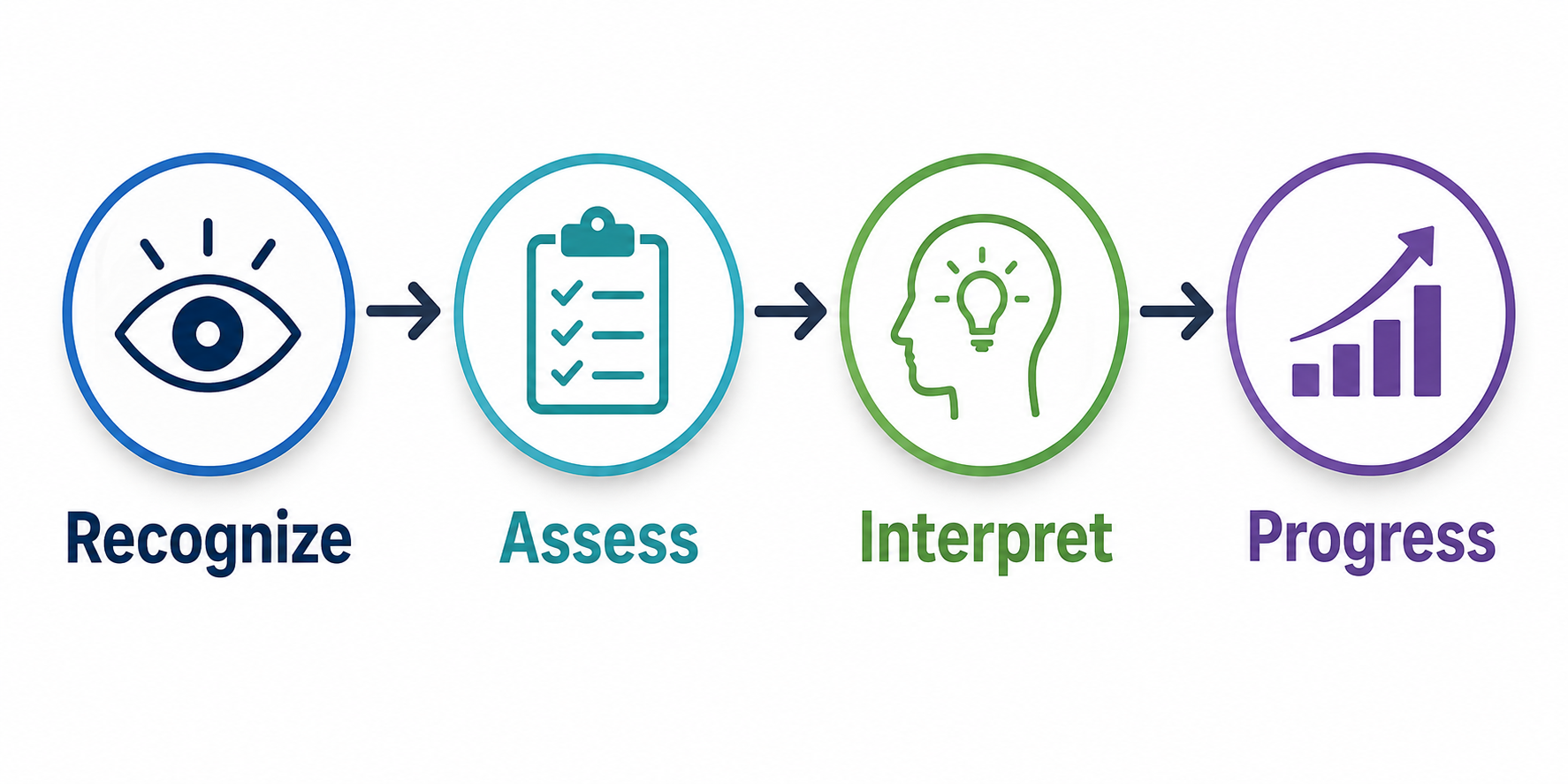
This clinical roadmap will walk through how to:
Recognize lumbar disc pathology patterns
Differentiate it from other causes of leg pain
Perform an evidence-based physical therapy examination
Guide treatment based on symptom response and movement behavior
What Is Lumbar Disc Herniation with Sciatica?
Lumbar disc herniation occurs when disc material irritates or compresses nearby nerve structures in the lumbar spine. This may result in:
Localized low back pain
Radiating leg pain (sciatica)
Neurological symptoms such as numbness, tingling, or weakness
Key Clinical Concept: Lumbar disc-related pain is often mechanically sensitive and movement-dependent, meaning symptoms change based on position and loading.
Common Symptoms of Lumbar Disc Pathology
Patients with lumbar disc herniation and lower extremity symptoms often report:
Low back pain with or without leg pain
Radiating pain into the buttock, thigh, calf, or foot
Symptoms worse with sitting, bending, or lifting
Pain aggravated by coughing, sneezing, or straining (Valsalva)
Relief with standing or walking in many cases
Important Note:Symptoms may or may not follow a classic dermatomal pattern.
Physical Therapy Examination for Lumbar Disc Herniation
Subjective Examination Findings
When I hear this patient presentation, I immediately consider lumbar disc pathology with nerve root involvement. Key presentation pattern:
Age typically 20–50
Leg pain greater than low back pain
Symptoms often extend below the knee
Worse with sitting
Worse with bending or lifting
Possible lifting-related onset or no clear mechanism
Reports numbness, tingling, or weakness in the lower extremity
Key history features include:
Acute or gradual onset of symptoms
History of lifting, bending, or prolonged sitting
Symptoms that fluctuate with position
Reports of “pinched nerve” or “sciatica”
Symptom Behavior in Daily Activities
Common aggravating activities:
Prolonged sitting
Forward bending
Driving
Lifting objects from the floor
Common relieving activities:
Standing
Walking
Extension-based positions (in some patients)
Objective Examination Findings
Lumbar Range of Motion (AROM)
Typical findings may include:
Painful or limited lumbar flexion
Possible symptom reduction with lumbar extension
Reproduction or peripheralization of leg symptoms with flexion
Repeated Movement Testing (McKenzie Method Concepts)
Repeated movement testing helps identify directional preference:
Repeated flexion → may worsen or peripheralize symptoms
Repeated extension → may centralize symptoms in some patients
Some patients show no clear directional preference
Centralization is a key clinical sign associated with disc-related pain patterns.
Neurological Examination in Lumbar Disc Herniation
A neurological screen may include:
Myotomal weakness (if nerve root involvement exists)
Dermatomal sensory changes
Reflex changes at affected levels (L4, L5, S1)
Clinical Insight:Neurological findings may be absent even in patients with symptomatic disc pathology.
Special Tests for Lumbar Disc Pathology
Straight Leg Raise (SLR)
The SLR test assesses neural tension and nerve root irritation.
Positive test reproduces familiar leg symptoms
More meaningful when symptoms occur below the knee
Crossed Straight Leg Raise
Lower sensitivity but higher specificity
Strongly suggests nerve root involvement when positive
Slump Test
Assesses neural mechanosensitivity
Helpful when SLR is inconclusive
Differential Diagnosis of Lumbar Disc Herniation
Conditions that may mimic lumbar disc pathology include:
Lumbar spinal stenosis
Facet joint dysfunction
Sacroiliac joint dysfunction
Hip joint pathology (referred pain)
Peripheral nerve entrapment
Spondylolisthesis
Accurate diagnosis depends on symptom behavior and movement response rather than imaging alone. Remember, your PT diagnosis doesn’t have to be “this” OR “that” – it can absolutely be “this” AND “that”. Meaning, you can have hip pain/pathology with disc pathology. I find this comforting when I have tricky patient presentations. Sometimes the diagnosis is plain as day and other times it is clear as mud. This is why I largely treat using an impairment-based approach. Identify the impairments and treat them according to patient response while having a whole-patient perspective of their current situtation.
Physical Therapy Treatment for Lumbar Disc Herniation
Patient Education (Most Important)
Personally, I feel like patient education can go a long way and is sometimes more important than our movement-based interventions. Patients could be putting themselves in positions that are aggravating their symptoms and not even realize they are doing it. I also like to really emphasize the importance of sleep, nutrition, and hydration. But the single most important thing I like to educate patients on are all the good things I found during the exam. If there are no red flags, that’s the first thing I tell them to put them at ease. Here are some good educational talking points:
Activity modification based on symptom response
Avoidance of symptom-aggravating positions early in recovery
Postural education as appropriate (not rigid correction)
Importance of maintaining movement and gradual return to activity
Explanation of centralization/peripheralization concepts when appropriate
Early Phase Treatment Goals
Reduce pain and irritability
Avoid sustained flexion positions
Encourage frequent movement and positional changes
Promote walking as tolerated
Exercise-Based Treatment Approach
Extension-Dominant Presentation
If symptoms improve with extension:
Prone lying progression
Prone on elbows
Repeated prone press-ups
Standing lumbar extension
Non-Specific or Mixed Presentation
Gentle mobility exercises
Symptom-guided movement exploration
Gradual loading progression
Strengthening and Motor Control
As symptoms improve, focus on:
Core stabilization training
Hip hinge mechanics
Gluteal strengthening
Functional movement retraining
Manual Therapy in Lumbar Disc Management
Manual therapy may include:
Lumbar spinal mobilization
Thoracic spine mobility techniques
Soft tissue techniques for symptom modulation
Manual therapy should be used as an adjunct to active rehabilitation, not a primary treatment.
Clinical Insights for Lumbar Disc Herniation
Sitting intolerance is a common early indicator.
Centralization is a strong predictor of mechanical responsiveness.
Not all disc herniations require extension-based treatment.
Imaging findings do not always correlate with symptoms.
Normal neurological exam does not rule out disc pathology.
Clinical Pearl for Physical Therapy Students
One of the biggest mistakes PT students make is assuming every patient with radiating leg pain has a lumbar disc herniation.
Many patients improve significantly with conservative treatment, and imaging findings do not always correlate with symptoms. Your job as a clinician is not simply to identify a structure, but to understand how the patient presents functionally and how they respond to movement.
Focus less on memorizing isolated orthopedic tests and more on recognizing patterns across the subjective exam, movement assessment, neurological findings, and symptom behavior.
That is where clinical reasoning begins to develop.
Red Flags That Require Medical Referral
Progressive neurological weakness
Loss of bowel or bladder control
Saddle anesthesia
Unexplained weight loss
History of cancer with new onset symptoms
Fever or systemic illness
Significant trauma
Key Takeaways
Lumbar disc herniation with lower extremity symptoms is best understood as a movement-sensitive and mechanically influenced condition.
The most important clinical skills include:
Identifying symptom behavior patterns
Recognizing centralization or peripheralization
Determining directional preference when present
Differentiating disc-related pain from other sources of referred pain
Treatment should always be guided by the patient’s response to movement and loading.
A Quick Story
These patients sometimes come to you in a lot of pain. Early in my career, I had a patient come in with an acute lumbar disc herniation. He was able to walk long enough to face plant on the couch in the lobby. We did the entire evaluation with him laying on his stomach because this was the only position that kept him from excruciating pain. He had not had any imaging yet, but presented with all the signs of a disc issue. We got his symptoms calmed down with some education and mobility exercises in a couple of visits, but as soon as he had his MRI, he went in for surgery due to the severity of his pain and how it was effecting his day-to-day. He had a successful microdiscectomy and was able to return to his life of running his business and providing for his family.
Would I have loved to see this guy through rehab without surgery? Absolutely. But surgery felt like the best option to him and I’m 100% okay with that. This is an extreme example, but this goes to show how acutely you can see these patients in the clinic. Not everyone comes in with 3/10 sciatic nerve pain, sometimes they come in and are desperate for any kind of pain relief.
This is why education and individualization matters so much in physical therapy. Every person has their own story to write and you are there to guide them in the right direction.
-Your Friendly Neighborhood CI
Key References
Delitto A, George SZ, Van Dillen LR, et al. Low back pain. J Orthop Sports Phys Ther. 2012;42(4). doi:10.2519/jospt.2012.0301
George SZ, Fritz JM, Silfies SP, et al. Interventions for the management of acute and chronic low back pain: revision 2021. J Orthop Sports Phys Ther. 2021;51(11). doi:10.2519/jospt.2021.0304
National Institute for Health and Care Excellence (NICE). Low Back Pain and Sciatica in Over 16s: Assessment and Management. NICE Guideline NG59. Published November 2016. Updated December 2020.
Hancock MJ, Maher CG, Latimer J, McAuley JH. Systematic review of tests to identify the disc, SIJ, or facet joint as the source of low back pain. Eur Spine J. 2007;16(10):1539-1550. doi:10.1007/s00586-007-0391-1
North American Spine Society. Evidence-Based Clinical Guidelines for Multidisciplinary Spine Care: Diagnosis and Treatment of Lumbar Disc Herniation With Radiculopathy. North American Spine Society; 2014.
North American Spine Society. Evidence-Based Clinical Guidelines for Multidisciplinary Spine Care: Degenerative Lumbar Spinal Stenosis. North American Spine Society; 2011.
Fritz JM, Cleland JA, Childs JD. Subgrouping patients with low back pain: evolution of a classification approach to physical therapy. J Orthop Sports Phys Ther. 2007;37(6):290-302. doi:10.2519/jospt.2007.2498
Educational Disclaimer
This article is for educational purposes only and does not replace comprehensive clinical evaluation, diagnosis, or individualized patient care.
Continue Building Your Clinical Reasoning
Enjoyed this Clinical Roadmap?
Explore more evidence-based guides designed to help physical therapy students and new graduates build clinical reasoning, not just memorize diagnoses. From common orthopedic conditions to post-operative rehabilitation and exercise prescription, each Clinical Roadmap is designed to help you think like a clinician and become more confident in the clinic.
New Clinical Roadmaps are added regularly as the Thinking Clinically library continues to grow.
Movement doesn't have to be complicated.
Building your exercise knowledge takes time. Explore the
Thinking Clinically YouTube exercise library for simple, practical exercise
demonstrations to help you build your clinical knowledge and understand, choose,
and teach exercises with confidence.
