Clinical Roadmap: Lumbar Artificial Disc Replacement (ADR)
Lumbar artificial disc replacement (ADR), also called lumbar total disc arthroplasty (TDA), presents a unique rehabilitation challenge for physical therapists. Unlike lumbar fusion, which intentionally eliminates motion at the surgical level, artificial disc replacement is designed to preserve motion while addressing pain associated with a severely degenerated disc. Quite the difference there, right?
A patient following lumbar artificial disc replacement does not simply need to become “strong enough” to protect a fused segment. They need to gradually restore movement, rebuild trunk and hip capacity, and regain confidence in using their spine while respecting the healing tissues surrounding the surgical approach and implant.
For the student or new clinician, the most important question is not: “What exercises are allowed at this stage?”
Instead, ask: “What has healed, what can the patient currently tolerate, and what capacity do they need to develop next?”
That shift, from following a calendar to understanding the patient's current capacity, is the foundation of good postoperative rehabilitation. That’s another reason why it’s so important to take a thorough patient history so that you understand how the patient was prior to surgery and where they’re at now.
Understanding the Surgery
Lumbar artificial disc replacement involves removing a damaged intervertebral disc and replacing it with a prosthetic disc designed to maintain movement at the involved spinal segment.
The procedure is most commonly performed at L4-L5 or L5-S1 and is generally considered for carefully selected patients with symptomatic degenerative disc disease who have not improved adequately with conservative management.
Remember the goal of the surgery is much different from a fusion. With a fusion, the surgeon intentionally creates a stable segment by eliminating motion between the vertebrae. With artificial disc replacement, the goal is to remove the painful disc while maintaining movement at that level.
This creates an important rehabilitation principle: Motion is not the enemy after artificial disc replacement, but uncontrolled or excessive loading during early healing can still be problematic.
The therapist therefore has to balance two seemingly competing goals: Protect the surgical tissues while gradually restoring normal movement and physical capacity (without flaring up the patient).
Why Did This Patient Need Surgery?
Before evaluating the postoperative patient, understand why the surgery was performed. A typical ADR candidate may have:
Chronic discogenic low back pain
Advanced degenerative disc disease
Internal disc disruption
Persistent symptoms despite conservative treatment
Limited facet joint degeneration
No significant spinal instability
No major deformity
Appropriate overall bone quality
The important clinical point is that these patients often arrive at surgery after months or years of pain and activity restriction. Their postoperative impairments therefore may not be caused entirely by the surgery. Some are the result of the original condition. Others are consequences of the surgical approach. And others may be consequences of prolonged inactivity. This is very important to keep in mind with a big picture approach to rehab.
The First Clinical Question: Is Recovery Progressing Normally?
Early postoperative rehabilitation should begin with a simple question: Does this patient's presentation look like expected postoperative recovery? A typical patient may demonstrate:
Incisional soreness
Abdominal discomfort
Guarded movement
Reduced walking tolerance
Difficulty with transfers
Reduced trunk activation
General deconditioning
Fear of bending or twisting
Hip and trunk weakness
These findings are not necessarily concerning. The more important question is whether they are improving over time. A patient who is still somewhat stiff but walking farther, sleeping better, and reporting less pain may be progressing appropriately.
A patient whose pain is steadily increasing, function is declining, or neurological symptoms are developing requires a different clinical response.
This is one of the most important postoperative reasoning skills: Look for the direction of recovery, not simply the presence of symptoms.
What Makes ADR Rehabilitation Different From Lumbar Fusion?
This is one of the most important concepts for students and clinicians to understand. A lumbar fusion is designed to create a stable, immobile segment. An artificial disc replacement is designed to preserve movement. Therefore, the long-term rehabilitation goals are different. Following fusion, clinicians may place greater emphasis on protecting the fusion while gradually restoring functional strength. Following ADR, the clinician eventually needs to restore:
Functional spinal mobility
Trunk endurance
Hip strength
Lumbopelvic coordination
Lifting capacity
Dynamic control
Confidence with movement
This does not mean the patient should aggressively mobilize the lumbar spine immediately after surgery. Early protection is still necessary. Instead, the long-term goal is to transition from:
Protection → controlled movement → progressive loading → functional capacity.
The Clinical Examination
The postoperative examination should be targeted rather than exhaustive. The therapist needs enough information to answer several questions:
Is the surgical site healing appropriately?
Are symptoms behaving as expected?
Is neurological function stable?
Is mobility improving?
Is the patient developing appropriate trunk and hip control?
What functional activities remain limited?
Is the patient ready for increased loading?
Surgical History
Obtain the operative information whenever possible. Important details include:
Surgical date
Surgical level
Implant type
Surgical approach
Surgeon-specific restrictions
Concomitant procedures
Intraoperative complications
Current lifting restrictions
The surgical report can change your rehabilitation approach. For example, a patient who underwent an isolated ADR may have a very different rehabilitation course than a patient who underwent ADR combined with another procedure. Never assume the procedure from the diagnosis alone.
Examine the Incision and Surgical Approach
Lumbar ADR is typically performed through an anterior approach. That means the therapist should not focus exclusively on the lumbar spine. The anterior abdominal wall, hip flexors, and surrounding soft tissues may also influence postoperative function. Observe:
Incision healing
Redness
Drainage
Swelling
Bruising
Abdominal guarding
Movement avoidance
Trunk posture
As healing progresses, scar mobility may become relevant. However, scar tissue should remain relatively low on the clinical reasoning hierarchy. A scar that looks imperfect does not necessarily explain a patient's functional limitation.
Assess Movement But Respect the Healing Stage
Early postoperative lumbar ROM testing should be conservative. Low hanging fruit from an objective exam standpoint is asking, “How much lumbar motion does this patient have?” But, the more useful question is: “How is this patient currently using their available movement?” Watch and observe both quantity and quality of movement in these patterns:
Sit-to-stand
Bed mobility
Walking
Squatting
Hip hinge
Transfers
Reaching
Turning
Early patients often move as though their lumbar spine is completely fragile. They may keep the trunk rigid, avoid bending, move excessively through the hips, hold their breath, and guard during transfers. These movement strategies may initially be protective. They should not necessarily become permanent.
Neurological Examination
A neurological examination is particularly important if the patient had preoperative leg symptoms or if new symptoms develop after surgery. Assess as indicated sensation, myotomes, reflexes, neural tension, and neurovascular status.
New or progressive neurological deficits should never simply be attributed to “normal postoperative soreness.” A patient developing new weakness, progressive sensory loss, saddle anesthesia, or bowel/bladder dysfunction requires medical evaluation.
Strength: Don't Test Everything Too Soon
Early postoperative strength assessment should be selective. Rather than immediately performing aggressive trunk testing, begin by observing:
Abdominal activation
Breathing mechanics
Glute activation
Hip strength
Functional transfers
Walking endurance
As healing progresses, strength testing can become increasingly functional. Eventually, the therapist should be able to assess:
Squatting
Hip hinging
Carrying
Lifting
Trunk endurance
Single-leg control
Dynamic stability
Eventually you will move from: “Can this muscle contract?” to “Can this patient use their body effectively under load?”
The Four-Phase Rehabilitation Model
The exact timeline should always be determined by the surgeon's protocol and the patient's presentation. However, a useful way of thinking in this clinical framework:
Phase 1: Protection
Phase 2: Early Mobility
Phase 3: Progressive Strengthening
Phase 4: Functional Reintegration
The phases should overlap rather than function as rigid calendar-based boxes.
Phase 1: Protection
In this phase, the primary goal is not strength. It is safe recovery. During the early postoperative period, the therapist should focus on:
Incision protection
Pain management
Walking
Transfers
Bed mobility
Breathing
Gentle muscle activation
Prevention of excessive deconditioning
Walking is particularly valuable. Rather than prescribing one long walk, early patients often benefit from frequent short bouts of movement throughout the day. The patient should learn that movement is part of recovery, not something they need to fear.
Clinical Reasoning Question: Is the patient moving enough to promote recovery without exceeding the surgical restrictions? That is more useful than asking whether they have completed a specific number or type of exercises.
Phase 2: Early Mobility
As healing progresses, the emphasis shifts toward restoring controlled movement. Interventions may include:
Gentle lumbar mobility within the surgeon's guidelines
Thoracic mobility
Hip mobility
Pelvic control
Abdominal activation
Bridging
Sit-to-stand
Side stepping
Walking progression
Stationary cycling when cleared
The therapist should begin reducing unnecessary guarding. This is where the distinction between protection and fear becomes important. Protection is appropriate during healing. Fear-based avoidance can persist long after tissues have recovered enough to tolerate movement. The therapist's job is to gradually expose the patient to movement in a controlled manner. I like to tell my patients, “we must respect the pain, not fear it.” I often reinforce with my patients that hurt does not equal harm.
Phase 3: Progressive Strengthening
Once adequate healing has occurred and the patient demonstrates good movement control, rehabilitation should become increasingly active. This is where many patients need to transition from “I am recovering from surgery” to “I am rebuilding my physical capacity.” Strengthening may progress toward full-body movements such as:
Squats
Split squats
Step-ups
Hip hinges
Romanian deadlift patterns
Hip thrusts
Rows
Carries
Pallof presses
Bird dogs
Planks
Side planks
Progressive resistance training
The specific exercise matters less than the underlying principle: Gradually increase the amount of force the patient can tolerate while maintaining good movement quality and an appropriate symptom response.
Why Hip Strength Matters
One common mistake is to make ADR rehabilitation entirely about the lumbar spine. The hips are an important part of the system. However, weakness of the gluteus maximus, gluteus medius, hip abductors, and hip extensors can increase the demands placed on the trunk during functional tasks. Therefore, restoring hip strength can help improve:
Squatting
Lifting
Walking
Stair negotiation
Running
Recreational activity
Once again, the goal is not to eliminate lumbar movement. It is to create an appropriately coordinated relationship between the hips, pelvis, and spine.
Phase 4: Return to Function
The final phase should be driven by the patient's goals.
A sedentary worker may need:
Prolonged sitting tolerance
Repeated sit-to-stand
Carrying
Workstation tolerance
A construction worker may need:
Heavy lifting
Repetitive bending
Carrying
Uneven surfaces
Work simulation
A recreational athlete may need:
Running
Jumping
Rotational movement
Dynamic balance
Sport-specific loading
The rehabilitation plan should therefore become increasingly specific as the patient improves. This is where the therapist transitions from exercise rehabilitation to capacity and specificity training.
The Importance of Progressive Loading
One of the biggest mistakes in postoperative spine rehabilitation is being overly cautious indefinitely. Protection is appropriate during the early healing period. But a patient who remains on extremely light exercise for months may never develop the strength and endurance necessary for normal function. I think this is an area that most new clinicians struggle with when it comes to exercise progression. Progressive loading should eventually include:
Increased resistance
Increased repetitions
Increased range of motion
Increased movement complexity
Increased endurance
Increased functional demands
The progression should be earned through objective findings. A useful question is: “What can this patient tolerate today that they could not tolerate several weeks ago?” If the answer is consistently “more,” rehabilitation is working.
Common Clinical Challenges
Fear of Movement
A patient may believe that bending or twisting will damage the artificial disc. Education is important. The therapist should distinguish between early surgical protection and long-term movement capacity. You need to teach your patient that their spine can progressively tolerate normal movement and loading.
Deconditioning
Many ADR patients have experienced months or years of reduced activity before surgery. Even when their surgical tissues are healing normally, they may remain weak. This can explain fatigue, poor endurance, difficulty returning to exercise, and poor lifting tolerance. Do not mistake deconditioning for surgical failure.
Persistent Stiffness
Some stiffness is expected. The clinician should look at the overall pattern. If stiffness is accompanied by improving function, decreasing pain, and improving walking tolerance then continued rehabilitation may be appropriate. Progressive loss of motion or worsening pain, however, warrants further investigation.
When Should You Be Concerned?
The therapist should recognize findings that fall outside expected postoperative recovery. Important warning signs include:
Fever
Wound drainage
Increasing redness
Severe or progressively worsening pain
New neurological deficits
New bowel or bladder dysfunction
Saddle anesthesia
Significant swelling
Suspected vascular complications
Sudden loss of function
Potential procedure-specific concerns may include:
Implant migration
Implant subsidence
Implant malposition
Heterotopic ossification
Persistent or recurrent pain
These conditions cannot be diagnosed through PT examination alone. The therapist's responsibility is to recognize the pattern and appropriately refer back to the surgical team.
A Simple Clinical Reasoning Framework
When evaluating a patient following artificial disc replacement, think through these five questions:
1. Is healing progressing appropriately? Look at the incision, pain behavior, function, and overall recovery trajectory.
2. Is movement improving? Look at walking, transfers, lumbar mobility, hip mobility, and movement quality.
3. Is strength returning? Look at the trunk, hips, and functional movement patterns.
4. Is the patient tolerating progressive loading? Look at symptom response during and after exercise.
5. What does this patient need to return to? Work? Parenting? Exercise? Running? Lifting? Sport?
That final question should ultimately drive the rehabilitation program. We want to keep rehab salient and important to the patient. Final discharge from PT back to meaningful activities should always supercede specific “corrective exercises”, even from the very first visit.
The Rehabilitation Progression
A useful way to visualize the rehabilitation process is:
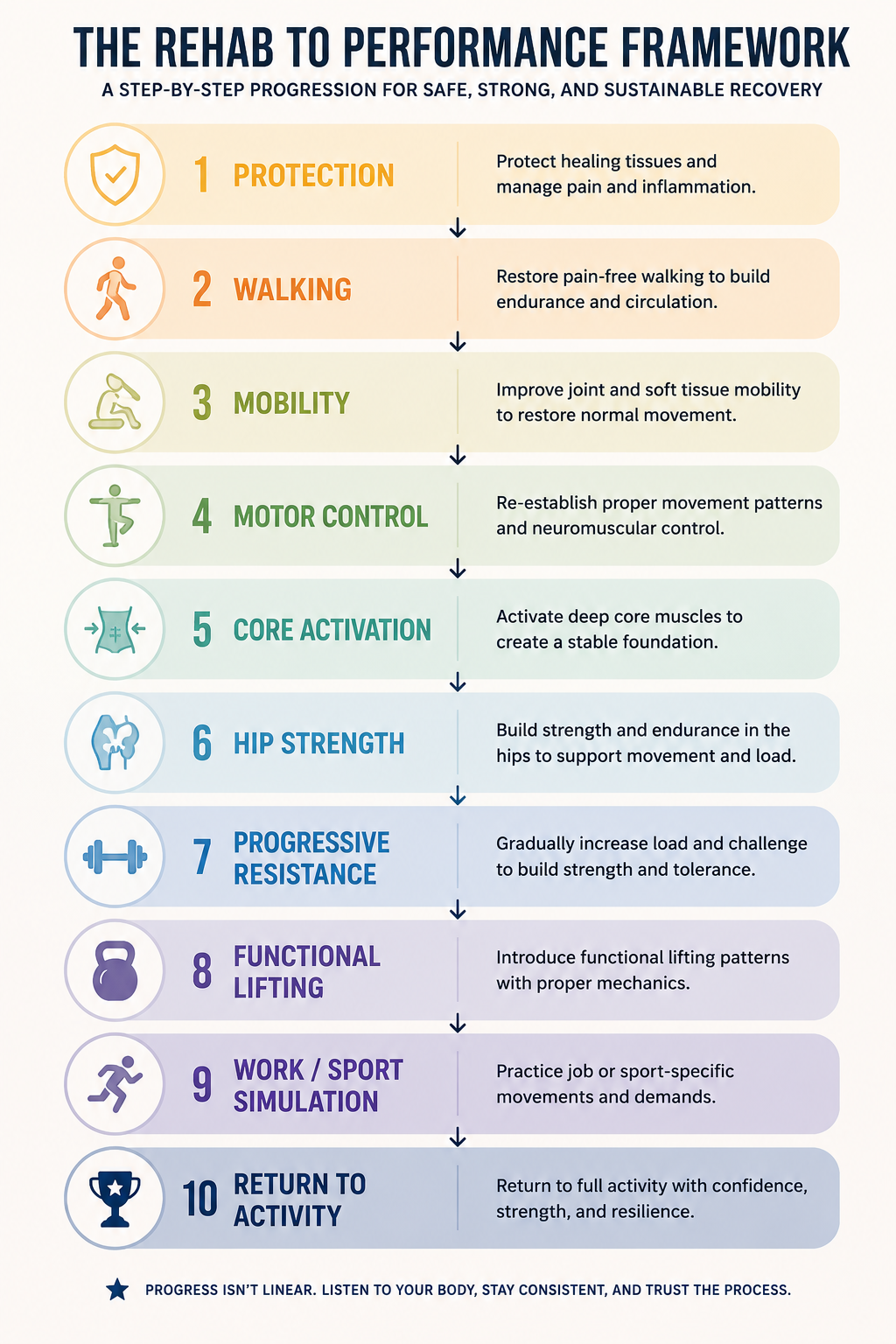
The progression is not simply about adding harder exercises. It represents a gradual increase in the demands placed on the patient's body.
The Most Important Clinical Lesson
Artificial disc replacement is a motion-preserving procedure, but that does not mean the patient should immediately move or load the lumbar spine aggressively. Early rehabilitation requires protection. Later rehabilitation requires movement. Still later rehabilitation requires loading. The therapist's job is to recognize when the patient has earned the next level of challenge. We are always working to restore capacity. A successful rehabilitation program helps the patient progress from:
“I am protecting my spine.” to “I trust my spine.”
and eventually:
“I can use my body normally again.”
That is the real objective of rehabilitation following lumbar artificial disc replacement.
Final Clinical Takeaway
When treating a patient after lumbar artificial disc replacement, don't think of rehabilitation as a race to restore motion or a prolonged period of protecting the spine. Think in terms of capacity and load tolerance. Protect the surgical tissues early. Restore controlled movement as healing permits. Build trunk and hip strength. Progress resistance gradually. Then expose the patient to the specific demands of their life.
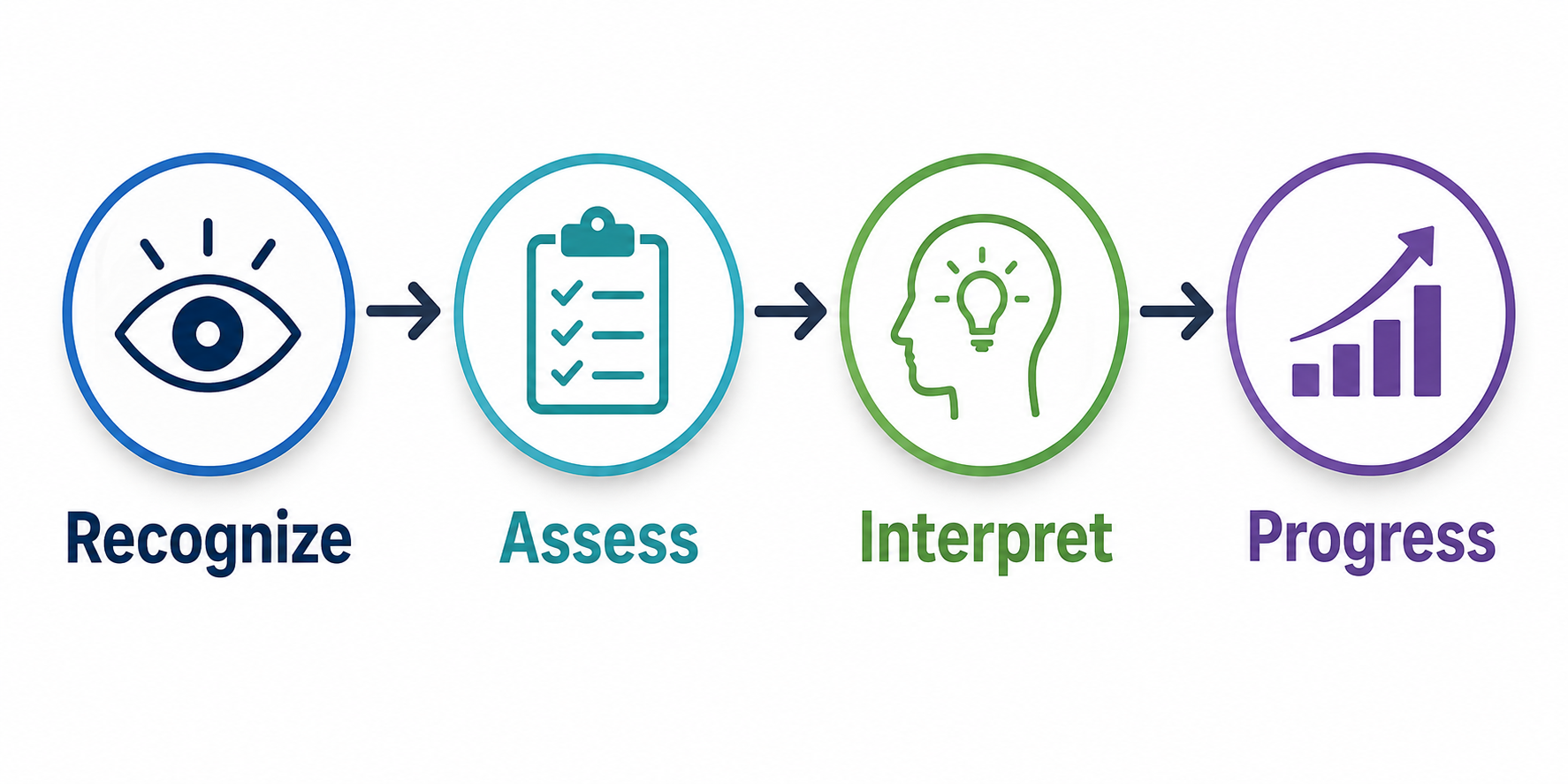
That is the clinical roadmap.
-Your Friendly Neighborhood CI
Key References
Kreiner DS, Matz P, Bono CM, et al. Guideline Summary Review: An Evidence-Based Clinical Guideline for the Diagnosis and Treatment of Low Back Pain. Spine J. 2020;20(7):998–1024.
Zigler JE, Delamarter RB. Five-Year Results of the Prospective, Randomized, Multicenter Food and Drug Administration Investigational Device Exemption Study of the ProDisc-L Total Disc Replacement versus Circumferential Arthrodesis for the Treatment of Single-Level Degenerative Disc Disease. J Neurosurg Spine. 2012;17(6):493–501.
Blumenthal S, McAfee PC, Guyer RD, et al. A Prospective, Randomized, Multicenter Food and Drug Administration Investigational Device Exemptions Study of Lumbar Total Disc Replacement with the CHARITE Artificial Disc versus Lumbar Fusion: Part I. Evaluation of Clinical Outcomes. Spine. 2005;30(14):1565–1575.
Harrop JS, Youssef JA, Maltenfort M, et al. Lumbar Adjacent Segment Degeneration and Disease After Arthrodesis and Total Disc Arthroplasty. Spine. 2008;33(15):1701–1707.
Garcia R Jr, Yue JJ, Blumenthal S, et al. Five-Year Results of a Randomized Controlled Trial for Lumbar Artificial Discs in Single-Level Degenerative Disc Disease. Spine. 2019;44(24):1685–1696.
Educational Disclaimer
This guide is intended as an educational resource for healthcare professionals and students. It should not replace clinical judgment, surgeon-specific rehabilitation protocols, or individualized patient care. Rehabilitation following lumbar artificial disc replacement should always be guided by tissue healing, objective clinical findings, patient response to treatment, and the operating surgeon's recommendations.
Continue Building Your Clinical Reasoning
Enjoyed this Clinical Roadmap?
Explore more evidence-based guides designed to help physical therapy students and new graduates build clinical reasoning, not just memorize diagnoses. From common orthopedic conditions to post-operative rehabilitation and exercise prescription, each Clinical Roadmap is designed to help you think like a clinician and become more confident in the clinic.
New Clinical Roadmaps are added regularly as the Thinking Clinically library continues to grow.
Movement doesn't have to be complicated.
Building your exercise knowledge takes time. Explore the
Thinking Clinically YouTube exercise library for simple, practical exercise
demonstrations to help you build your clinical knowledge and understand, choose,
and teach exercises with confidence.
