Clinical Roadmap: Sacroiliac Joint Fusion Rehabilitation
Sacroiliac (SI) joint fusion presents a unique rehabilitation challenge because the goal of surgery is not to restore motion at the SI joint, it is to eliminate abnormal motion and create a stable bony union. That changes how the physical therapist should approach rehabilitation.
The patient may feel significantly better within the first several weeks, but symptom improvement does not mean the fusion is biologically complete. Early rehabilitation therefore requires a balance between restoring mobility and function while protecting the developing fusion. As healing progresses, the focus shifts from protection to gait normalization, lumbopelvic control, progressive hip and trunk strengthening, and eventually the physical demands of work, exercise, and recreation.
The most important clinical question is not simply, "How many weeks postoperative is this patient?" Instead, ask: "Is the patient's current level of loading appropriate for the stage of healing and their demonstrated functional capacity?"
That question provides the foundation for safe progression following SI joint fusion.
Understanding the Surgery
SI joint fusion is performed to stabilize the sacroiliac joint and promote fusion between the sacrum and ilium. It may be considered for patients with persistent SI joint pain associated with degenerative changes, instability, trauma, or other conditions after appropriate nonoperative treatment has failed. Modern procedures are frequently performed using minimally invasive techniques. Implants are placed across the SI joint to limit motion and provide mechanical stability while bone develops around the surgical construct.
This is important for rehabilitation because the therapist is not trying to "mobilize" the SI joint back to normal. The entire goal of the surgery is the opposite: stability.
Therefore, postoperative rehabilitation should focus on restoring the patient's ability to move around the fused region while gradually developing the strength and control necessary to tolerate functional loading.
The First Clinical Task: Recognize the Surgical Stage
Before selecting an exercise, determine where the patient is in the healing process. A useful framework is:
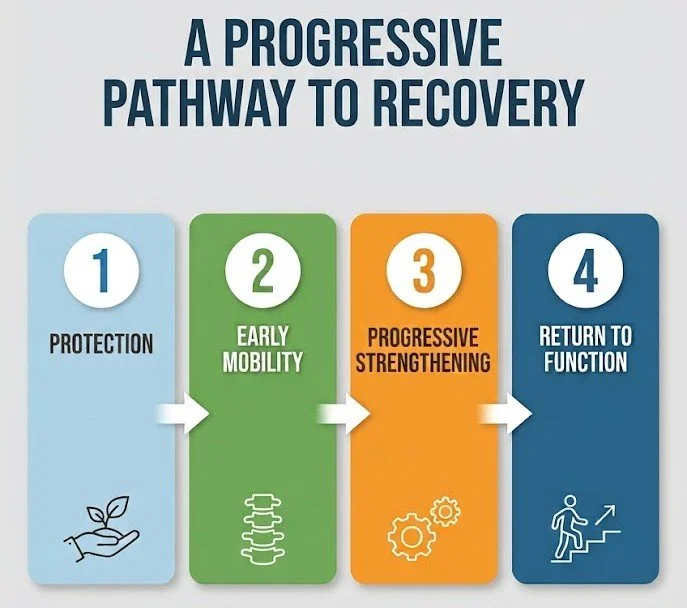
These phases are not rigid calendar-based categories. They provide a framework for understanding what the healing tissues can reasonably tolerate.
The operating surgeon's protocol should always take priority because weight-bearing restrictions, implant characteristics, surgical approach, and concomitant procedures can significantly affect rehabilitation.
Phase 1: Protection
The Clinical Goal: Early rehabilitation is primarily about protecting the surgical construct while maintaining basic function. Patients may initially have:
Posterior pelvic pain
Incisional discomfort
Difficulty with transfers
Reduced walking tolerance
Antalgic gait
Fear of weight bearing
General deconditioning
The therapist should resist the temptation to "fix" every movement impairment immediately. The first priority is safe mobility.
What Should the Therapist Assess?
Early examination should focus on:
Incision healing
Pain behavior
Swelling
Weight-bearing tolerance
Gait
Transfers
Assistive device use
Basic hip mobility
Neurological status when indicated
Aggressive lumbar or SI joint mobility testing is generally unnecessary at this stage.
Early Exercise Selection
The exercises selected during this phase should have a very specific purpose. Examples include:
Ankle pumps
Quadriceps sets
Gluteal sets
Gentle abdominal activation
Breathing exercises
Safe transfer training
Short, frequent walking bouts
The purpose is not to build maximal strength. The purpose is to maintain circulation, limit deconditioning, restore basic neuromuscular activation, and help the patient regain confidence with movement while the surgical site heals.
Clinical Reasoning Pearl: If the patient is becoming more independent with transfers and walking while pain is gradually decreasing, that is meaningful progress, even if strength and endurance are still limited. Early rehabilitation should not be judged by how many exercises the patient can perform.
Phase 2: Early Mobility
As healing progresses and weight-bearing restrictions are reduced or removed according to the surgeon's instructions, rehabilitation begins shifting toward normalizing movement. This is often where the therapist begins seeing the consequences of prolonged protective movement.
Patients may demonstrate:
Gluteal weakness
Reduced hip extension
Poor weight acceptance
Antalgic gait
Decreased balance
Trunk guarding
Reduced endurance
The therapist's job is now to gradually restore efficient movement without exceeding the patient's current load tolerance.
The Importance of Gait
Gait is one of the most useful functional measures following SI joint fusion. Look for:
Symmetrical step length
Appropriate stance time
Weight acceptance
Pelvic control
Trunk compensation
Trendelenburg pattern
Dependence on an assistive device
A patient who still demonstrates significant gait compensation may not be ready for aggressive strengthening simply because they have reached a particular postoperative milestone.
Exercise Progression
Depending on surgeon restrictions and patient presentation, rehabilitation may progress toward:
Hooklying marching
Bent-knee fallouts
Bridging
Clamshells
Side-lying hip abduction
Standing hip extension
Standing hip abduction
Heel raises
Mini squats
Step-ups
Progressive walking
The purpose is to begin restoring the hip and lumbopelvic system's ability to control load.
Phase 3: Progressive Strengthening
Once the patient demonstrates appropriate healing, normalized gait, and tolerance for basic strengthening, rehabilitation can become increasingly active. This is where the therapist should begin thinking beyond the surgical site. The patient does not simply need a "stronger SI joint." They need a stronger movement system. That includes:
Hip extensors
Hip abductors
Quadriceps
Hamstrings
Trunk musculature
Calf musculature
Balance and proprioception
Cardiovascular endurance
Progressing Load
Exercises may gradually progress toward:
Squats
Split squats
Step-downs
Romanian deadlifts
Progressive hip abductor strengthening
Loaded carries
Single-leg strengthening
Dynamic balance exercises
The key is not simply adding resistance. The therapist should evaluate: Can the patient control the movement while tolerating the load without a prolonged increase in symptoms? That becomes the new progression criterion.
The 24-Hour Response
One useful way to evaluate loading is to look beyond what happens duringthe exercise. A patient may tolerate an exercise reasonably well in the clinic but experience significantly increased symptoms later that day or the following day. That delayed response matters for future progressions.
For example, a patient begins resisted lateral band walking and reports only mild discomfort during the exercise. However, their buttock pain remains significantly elevated for two days afterward. The appropriate response is not necessarily to abandon strengthening altogether. Instead you may need to reduce resistance or volume, reassess movement quality, allow symptoms to return toward baseline, and then reintroduce loading gradually.
This teaches an important rehabilitation principle: A good exercise is not simply one the patient can perform. It is one the patient can recover from.
Phase 4: Return to Function
The final stage of rehabilitation should be individualized around the patient's actual goals. A sedentary patient returning to office work has very different rehabilitation requirements from someone who wants to hike, lift weights, perform manual labor, or participate in recreational sports. Ask: What does this person need to be able to do?Then train those demands.
Returning to Work
Carrying
Squatting
Lifting
Repeated transfers
Prolonged standing
Walking endurance
Returning to Exercise
Resistance training
Cardiovascular conditioning
Single-leg strength
Dynamic balance
Functional movement patterns
Returning to Recreation
Progress toward the specific demands of:
Hiking
Golf
Cycling
Swimming
Fitness classes
Other recreational activities
Higher-impact activities should be introduced only when appropriate and cleared according to the surgeon's recommendations.
The Most Important Differential Diagnosis
One of the most important skills following SI joint fusion is recognizing when persistent pain is not simply normal postoperative pain. A patient who continues to experience some discomfort during recovery is not automatically experiencing a complication. Instead, look at the pattern.
Expected Recovery
Pain is generally:
Gradually decreasing
Associated with activity
Improving with rest
Accompanied by improving function
Concerning Recovery
Pain is:
Increasing progressively
Returning after a period of improvement
Associated with declining function
Accompanied by new neurological symptoms
Associated with wound changes
Severe enough to limit previously tolerated activities
That change in pattern should prompt further assessment and potentially communication with the surgical team.
Complications the PT Should Recognize
Infection
Consider infection when there is:
Increasing redness
Drainage
Significant swelling
Fever
Escalating pain
Wound deterioration
These findings warrant prompt medical communication.
Hardware Problems or Nonunion
A patient who initially improves but later develops increasing weight-bearing pain or persistent deep buttock pain may require further medical evaluation for problems such as implant loosening or failure of fusion. The physical therapist does not diagnose hardware failure. The therapist recognizes thepattern that warrants referral.
Neurological Involvement
New or progressive numbness, weakness, radiating pain, reflex changes, or bowel or bladder dysfunction should never simply be attributed to normal postoperative recovery.
Don't Assume Every Postoperative Buttock Pain Is the SI Joint
This is one of the most important clinical reasoning points. A patient may continue to report buttock or posterior pelvic pain after SI joint fusion, but that does not automatically mean the fusion has failed. Consider other sources:
Lumbar Spine
Look for:
Radiating symptoms
Neurological findings
Symptoms related to spinal movement
History of lumbar pathology
Hip
Look for:
Groin-dominant pain
Restricted hip ROM
Pain with hip loading
Positive hip provocation findings
Muscular
Consider:
Gluteal weakness
Deconditioning
Compensatory movement
Myofascial pain
The postoperative diagnosis should never eliminate the need for a complete clinical examination.
What About SI Joint Alignment Testing?
This is an area where clinical reasoning is particularly important. It can be tempting to repeatedly assess pelvic alignment, leg length, or SI joint position and then build treatment around correcting a perceived positional fault. However, these findings should not dominate the examination. Remember, following fusion, the goal is not to restore SI joint motion.
The more valuable questions are:
Can the patient tolerate loading?
Is gait improving?
Is hip strength improving?
Is functional capacity increasing?
Are symptoms trending in the right direction?
Can the patient perform meaningful activities without a prolonged symptom response?
Functional performance should carry greater weight than isolated positional findings.
Common Clinician Mistakes
1. Treating the Calendar Instead of the Patient
"Six weeks postoperative" tells you something about healing. It does not tell you whether the patient is ready for a specific exercise.
2. Progressing Because Pain Is Better
Pain reduction is encouraging, but biological healing continues long after symptoms improve.
3. Progressing Strength Too Quickly
A patient may be capable of performing a resistance exercise but unable to recover from the load.
4. Ignoring Gait
A patient with significant gait compensation may need more foundational work before progressing to advanced strengthening.
5. Over-Treating the SI Joint
The surgical objective is stabilization, not restoration of SI joint motion.
6. Focusing Only on the Surgical Region
Long-term recovery depends on the entire kinetic chain. Hip strength, trunk control, balance, endurance, and functional movement all matter.
A Simple Clinical Decision-Making Framework
When deciding whether to progress an SI joint fusion patient, ask five questions:
1. Has the surgical site demonstrated appropriate healing?If no → protect and communicate with the surgical team as appropriate.
2. Are symptoms trending in the right direction?If yes → continue gradual progression. If no → reassess.
3. Is the patient tolerating the current level of loading?If yes → consider progression. If no → modify dosage.
4. Is movement quality improving?If yes → progress complexity and resistance. If no → address the underlying impairment.
5. Can the patient recover from the workload?If yes → continue building capacity. If no → reduce volume, intensity, or complexity.
This framework is more useful than memorizing a list of exercises by postoperative week.
The Rehabilitation Progression
A useful way to visualize SI joint fusion rehabilitation is:
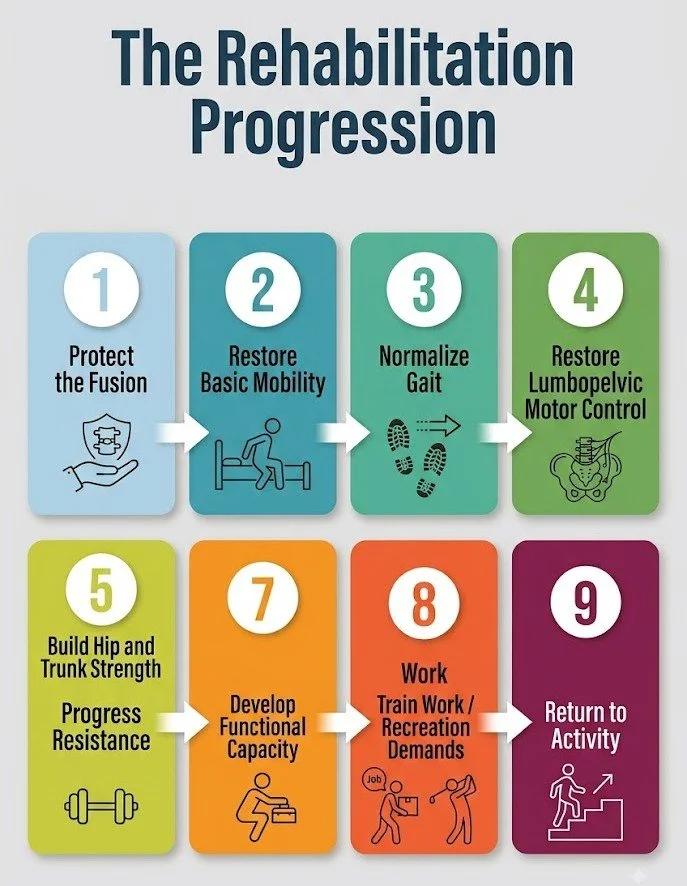
The progression is logical because each stage prepares the patient for the next.
The Big Picture
Rehabilitation following SI joint fusion is ultimately a process of building capacity around a surgically stabilized region. Early rehabilitation protects healing. Middle-stage rehabilitation restores movement, gait, strength, and endurance. Later rehabilitation teaches the patient to tolerate the specific physical demands of their life. The therapist's role is not to chase symptoms or follow an exercise checklist. It is to continually ask whether the patient's current capacity matches the demands being placed on the healing system.
When symptoms are improving, function is increasing, movement quality is normalizing, and the patient can recover from progressively greater loads, rehabilitation is moving in the right direction.
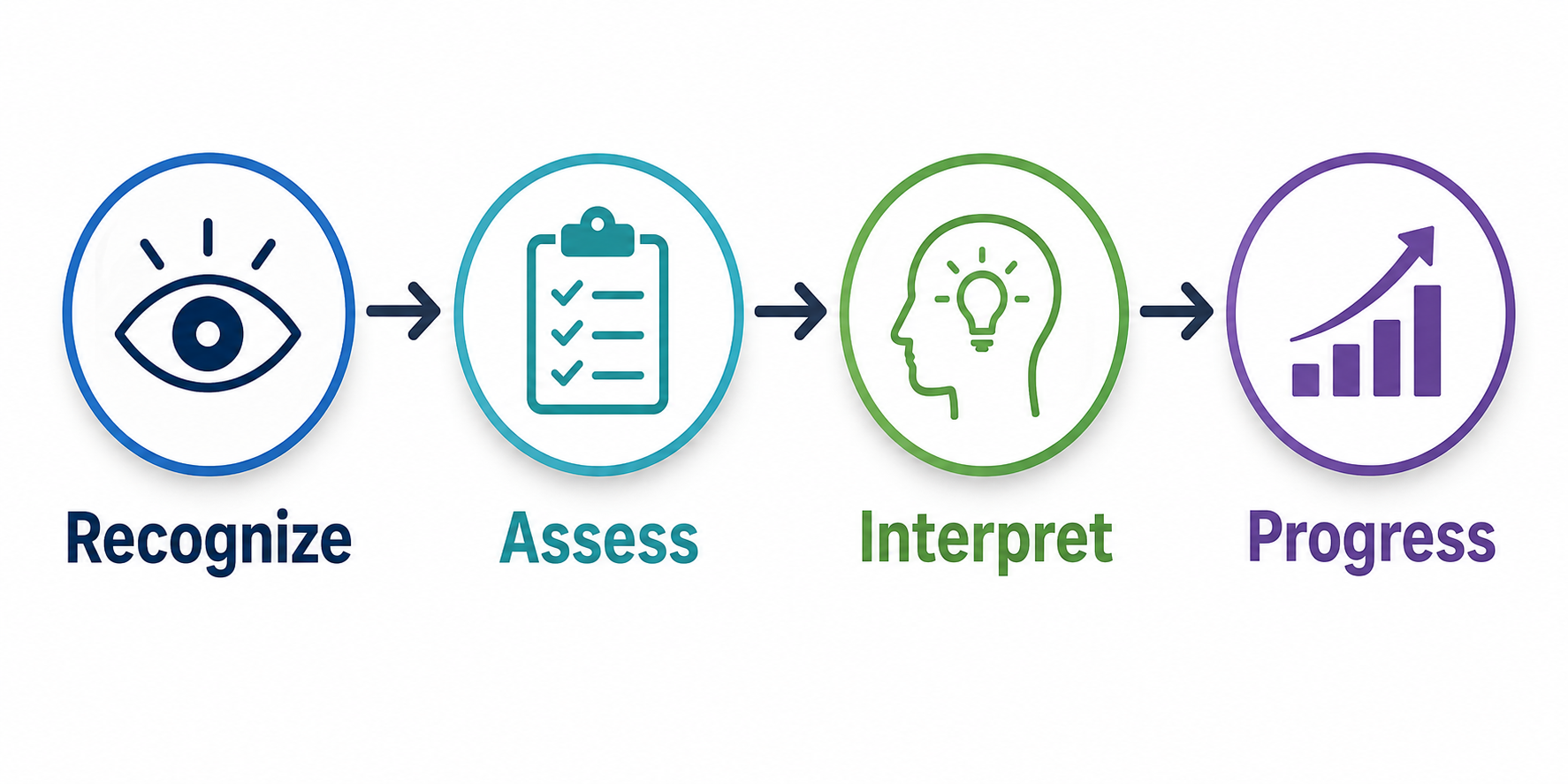
That is the clinical reasoning framework that turns a postoperative protocol into rehabilitation. Keep it simple. Keep it real. And keep it salient.
-Your Friendly Neighborhood CI
Key References
Sayed D, Deer TR, Tieppo Francio V, et al. American Society of Pain and Neuroscience (ASPN) Best Practice Guideline for the Treatment of Sacroiliac Disorders. J Pain Res. 2024;17:1601–1638.
Lorio MP; ISASS Coding & Reimbursement Task Force. ISASS Policy 2016 Update — Minimally Invasive Sacroiliac Joint Fusion. Int J Spine Surg. 2016;10:26.
North American Spine Society. Percutaneous Sacroiliac Joint Fusion: Coverage Policy Recommendation. North American Spine Society Coverage Policy Recommendations. Burr Ridge, IL: NASS; 2021.
Polly DW, Cher DJ, Wine KD, et al.; INSITE Study Group. Randomized Controlled Trial of Minimally Invasive Sacroiliac Joint Fusion Using Triangular Titanium Implants vs Nonsurgical Management for Sacroiliac Joint Dysfunction: 12-Month Outcomes. Neurosurgery. 2015;77(5):674–690.
Dengler J, Kools D, Pflugmacher R, et al. Randomized Trial of Sacroiliac Joint Arthrodesis Compared with Conservative Management for Chronic Low Back Pain Attributed to the Sacroiliac Joint. J Bone Joint Surg Am. 2019;101(5):400–411.
Educational Disclaimer
This guide is intended as an educational resource for healthcare professionals and students. It should not replace clinical judgment, surgeon-specific rehabilitation protocols, or individualized patient care. Progression should always be based on biological healing, objective examination findings, patient response, functional performance, and the operating surgeon's recommendations.
Continue Building Your Clinical Reasoning
Enjoyed this Clinical Roadmap?
Explore more evidence-based guides designed to help physical therapy students and new graduates build clinical reasoning, not just memorize diagnoses. From common orthopedic conditions to post-operative rehabilitation and exercise prescription, each Clinical Roadmap is designed to help you think like a clinician and become more confident in the clinic.
New Clinical Roadmaps are added regularly as the Thinking Clinically library continues to grow.
Movement doesn't have to be complicated.
Building your exercise knowledge takes time. Explore the
Thinking Clinically YouTube exercise library for simple, practical exercise
demonstrations to help you build your clinical knowledge and understand, choose,
and teach exercises with confidence.
