
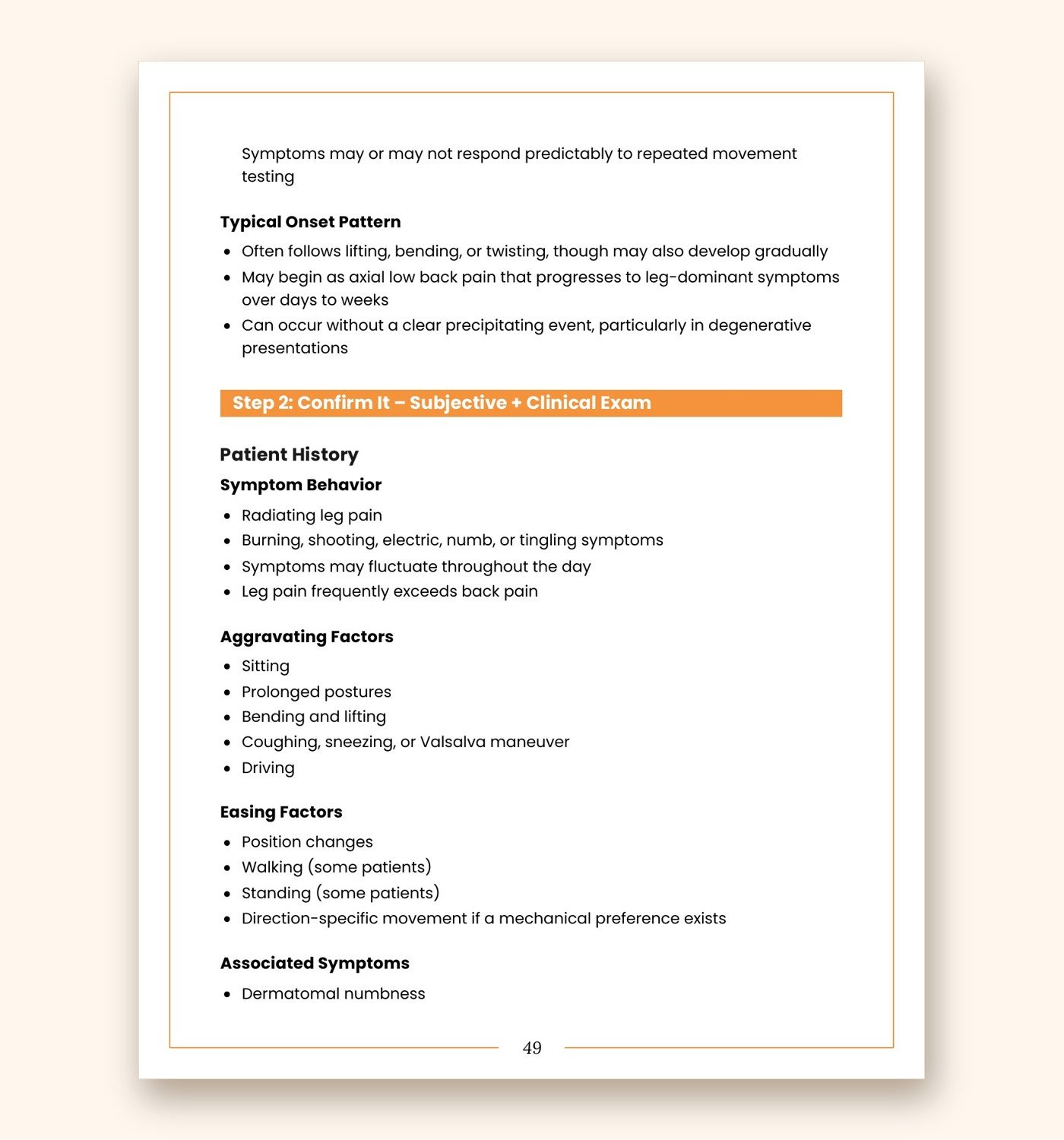
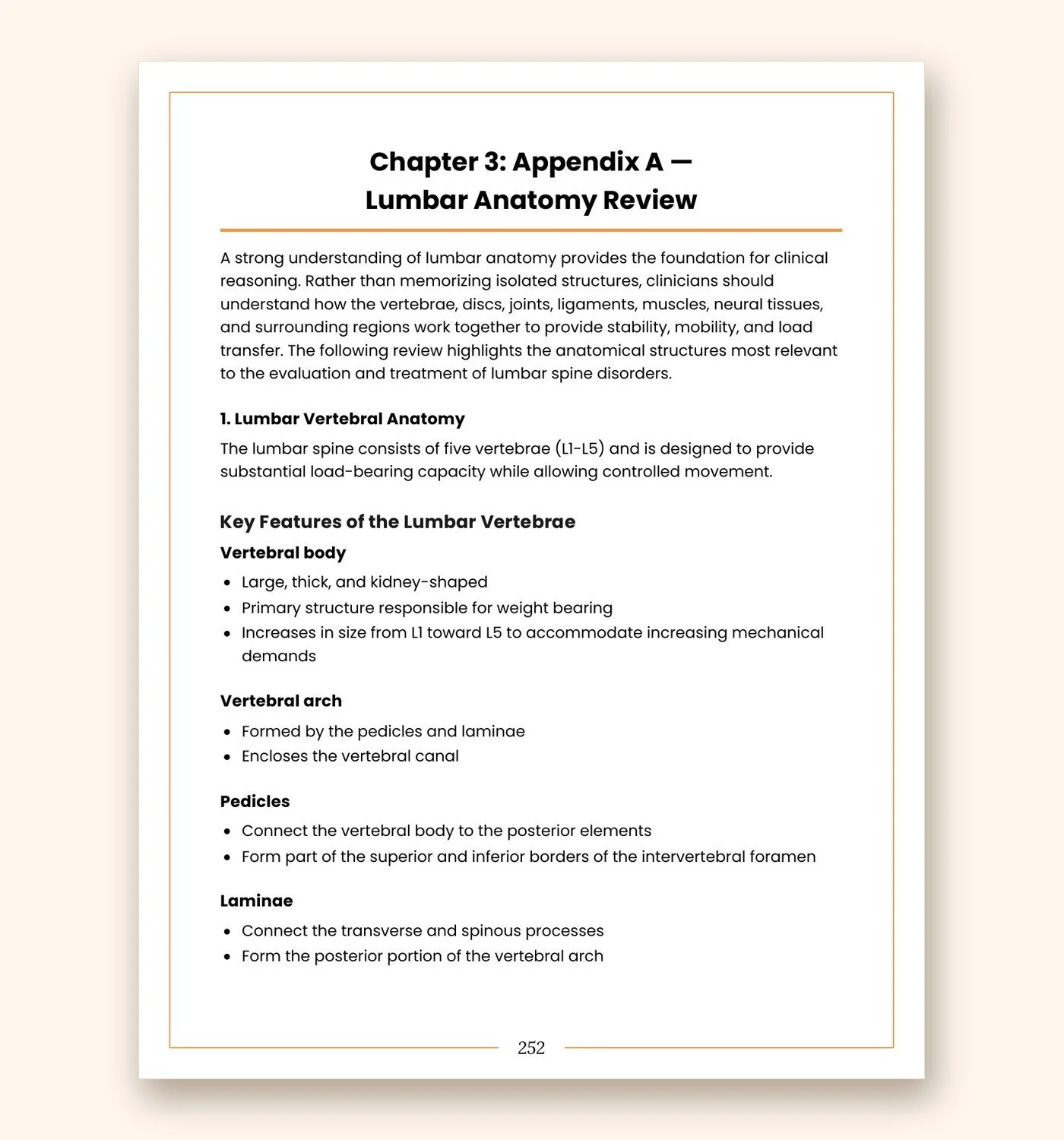
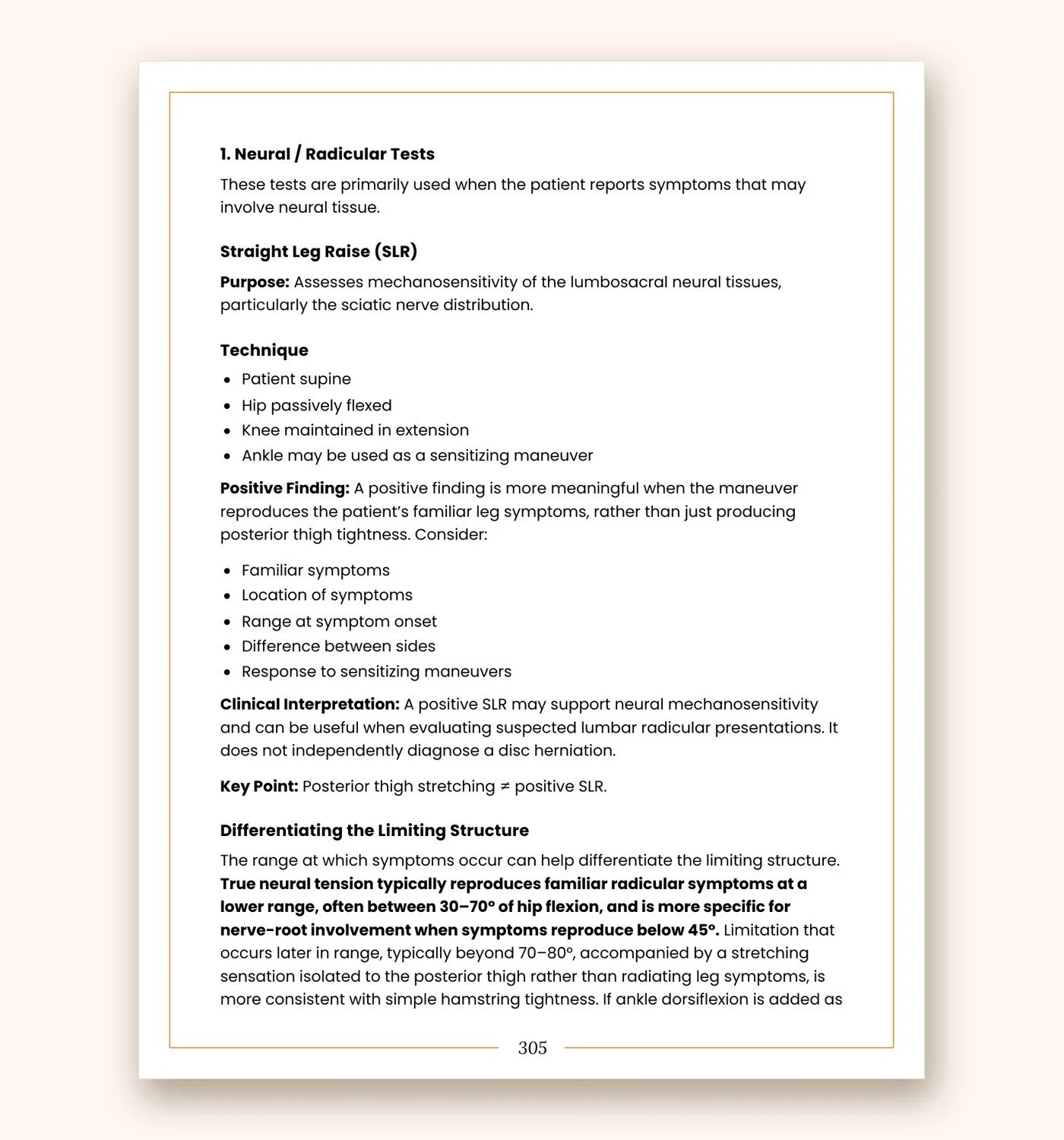
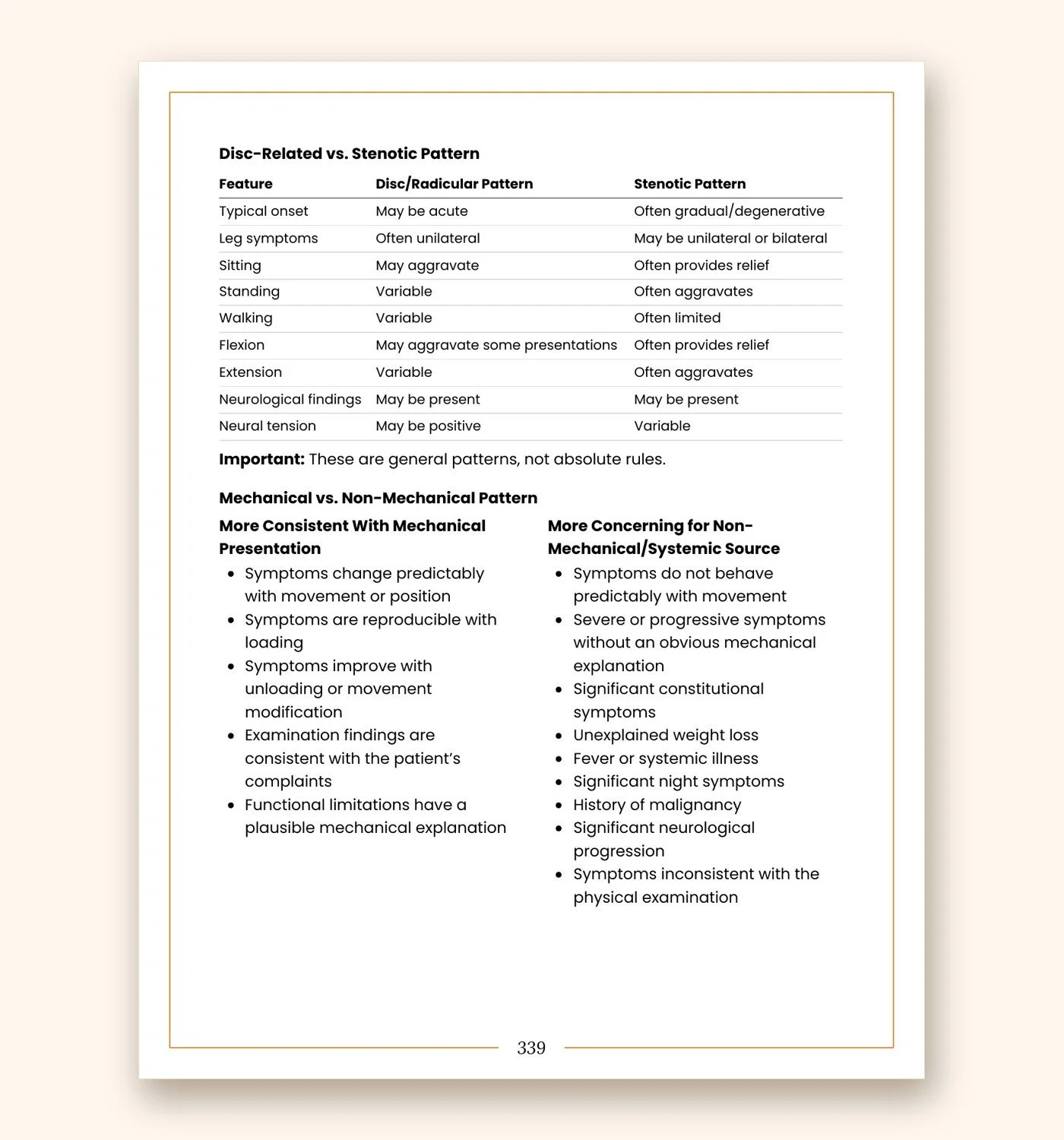
Most students know the facts. Fewer know how to think through a patient.
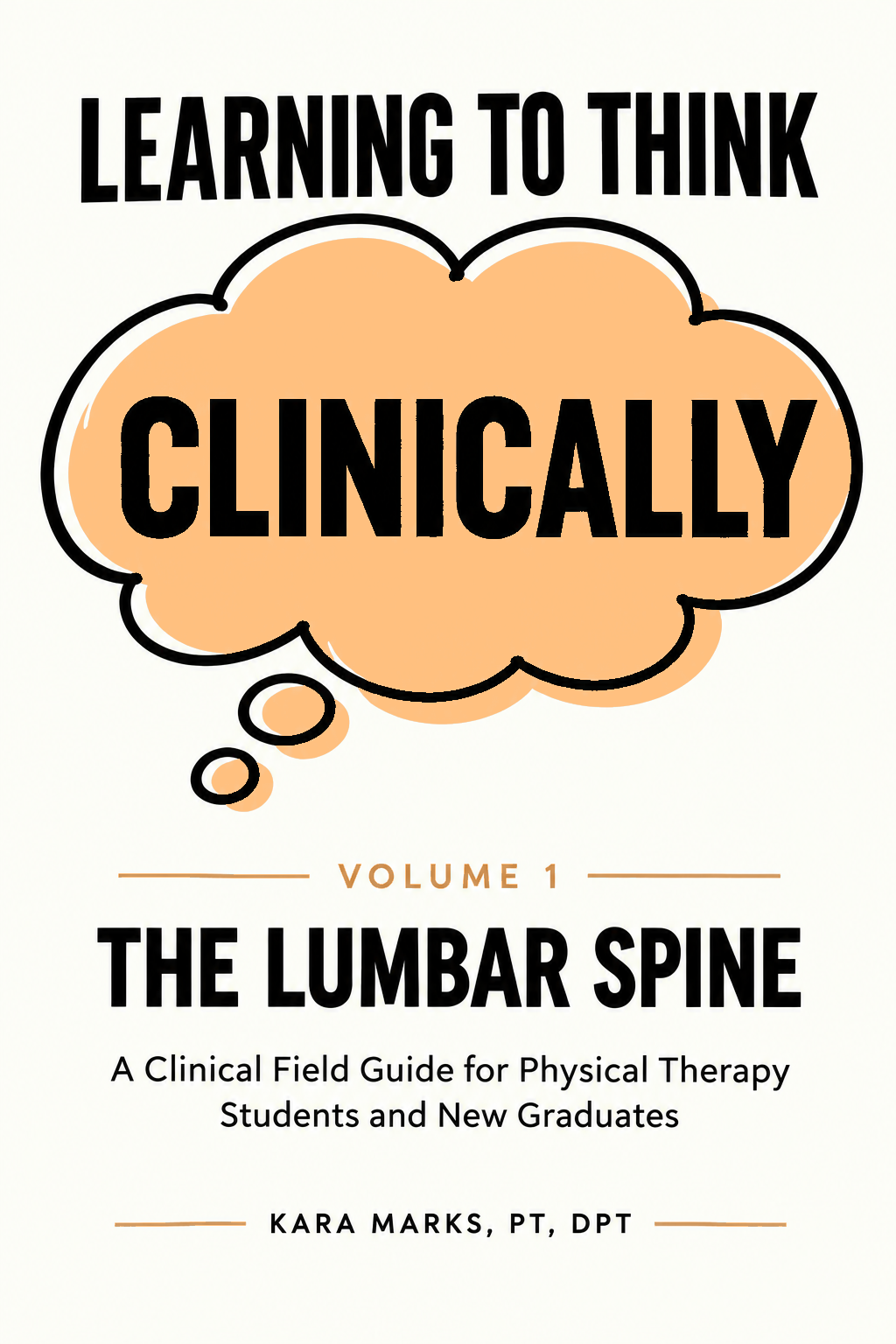
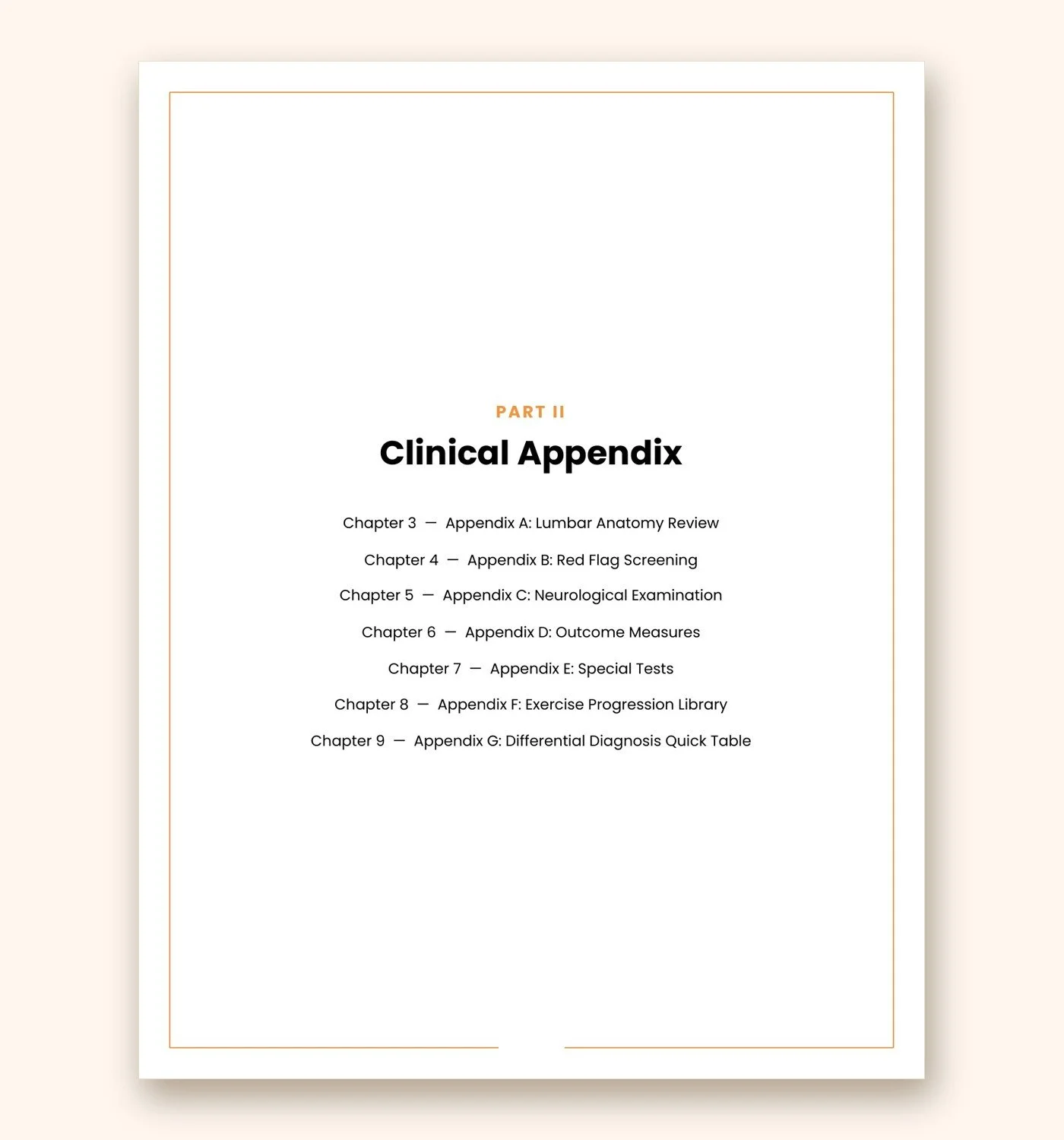
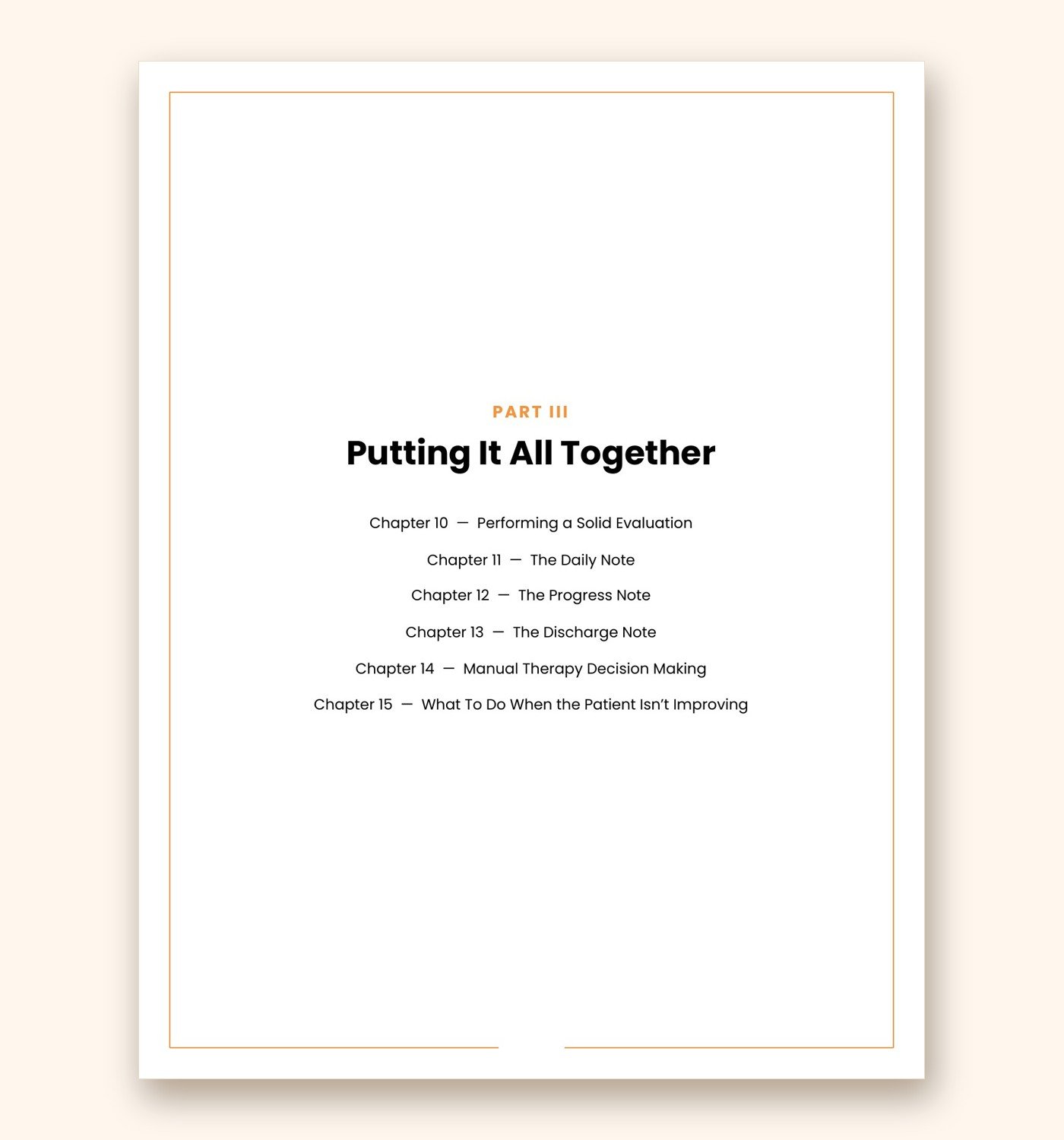
Learning to Think Clinically - Volume 1: The Lumbar Spine is a clinical reasoning field guide for physical therapy students and new graduates. It walks through the reasoning behind low back pain evaluation and treatment, not just the facts, so you can connect what you know to real patients in real time.
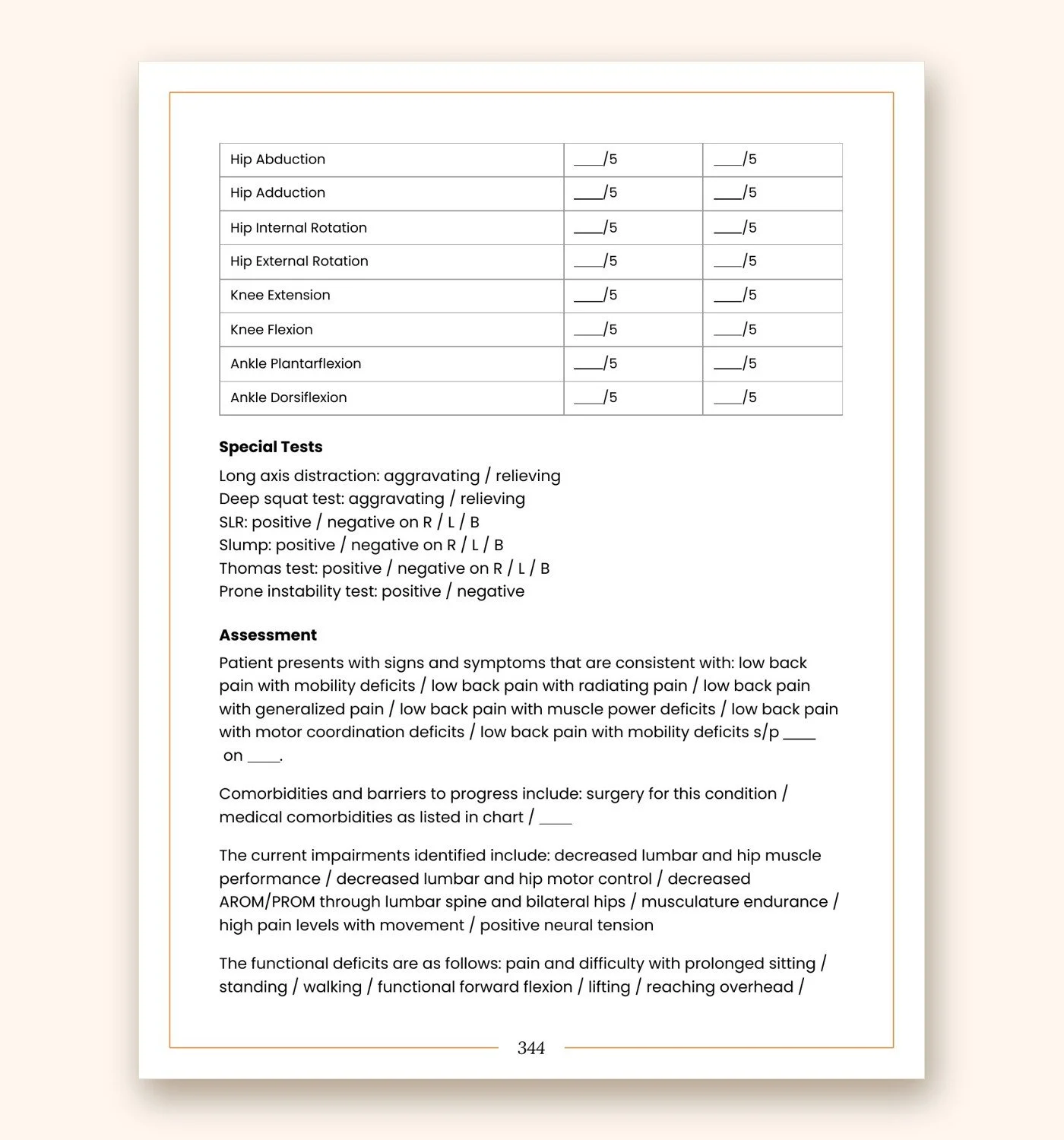
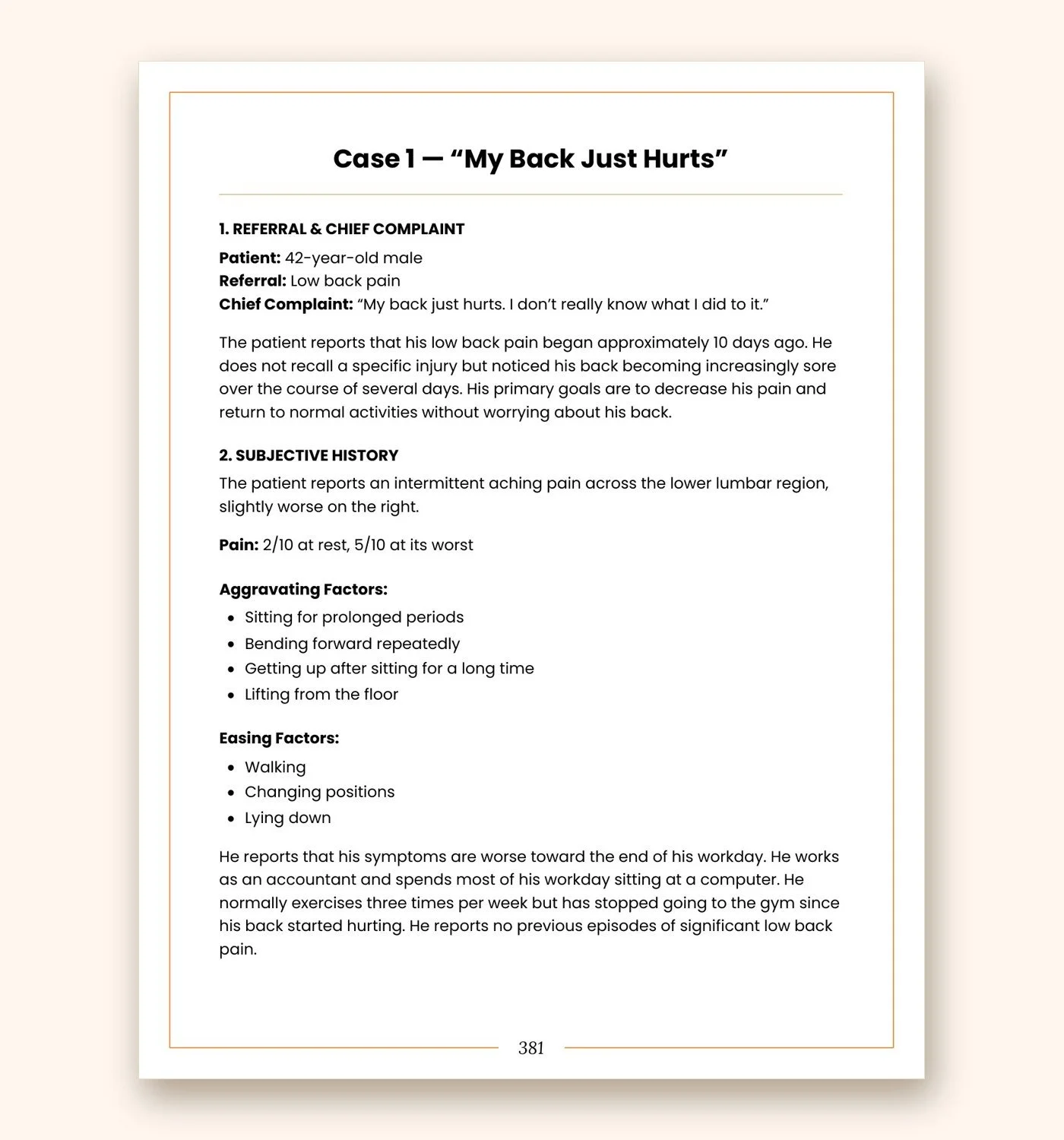
Inside this field guide:
Step-by-step clinical reasoning for the lumbar spine, from the first question to the treatment plan
Examination and evaluation, with the “why” behind each decision
Differential diagnosis and red flags, including when to refer
Clinical Notes, Clinical Pearls, and Reasoning Points that show how experienced clinicians think
Evaluation templates and links to supporting resources, with QR codes in the print edition
Written by Kara Marks, PT, DPT, an outpatient orthopedic physical therapist, clinical instructor, and educator, this book is designed to be used on clinical rotations, in lab, and or on your first job.
Perfect for:
DPT and PTA students heading into clinical rotations
New grads building confidence in their first year
Clinical instructors who want a teaching framework
Stop memorizing. Start thinking clinically.
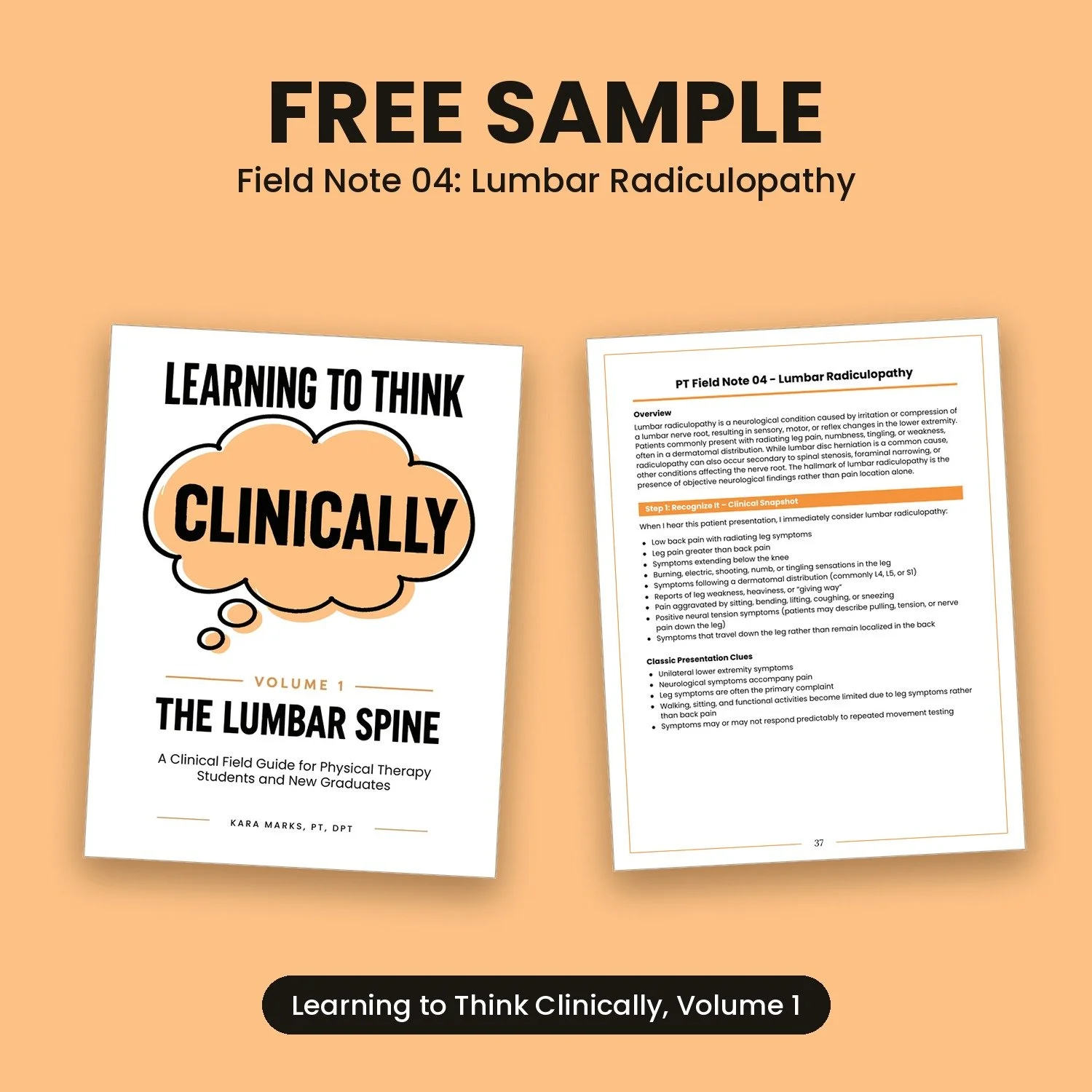
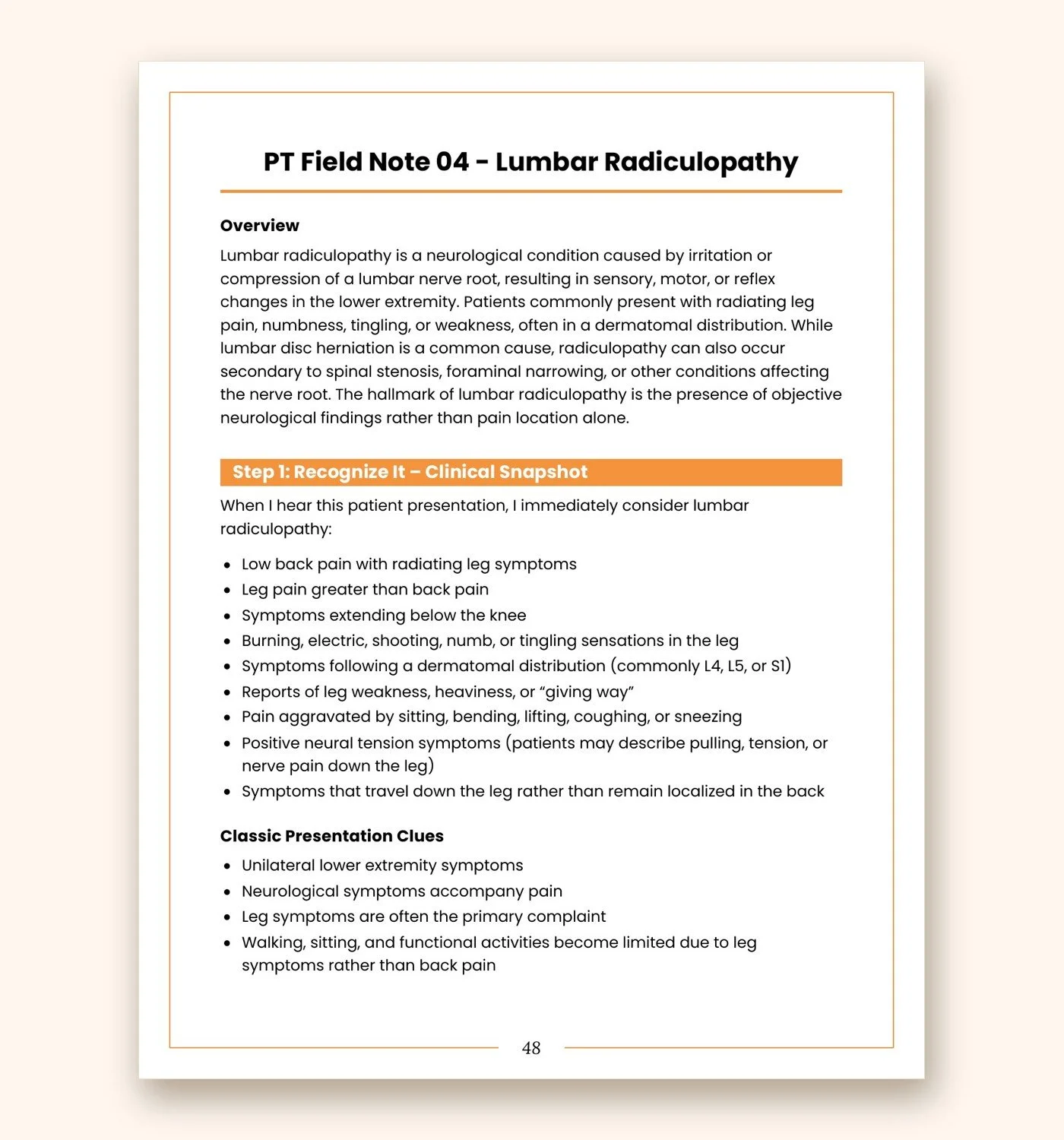
See how Learning to Think Clinically works before you buy. This free sample is the complete Lumbar Radiculopathy Field Note from Learning to Think Clinically, Volume 1: The Lumbar Spine, exactly as it appears in the book.
Patients with lumbar radiculopathy can be tricky. Leg symptoms don’t always mean nerve root involvement, and a positive finding doesn’t always mean what you think it does. This Field Note walks you through the reasoning, not just the facts.
You’ll work through the same four steps used in every Field Note:
Recognize it: spot the pattern in the patient’s presentation
Confirm it: use the history and exam to test your working idea
Differentiate it: work out what else it could be
Decide what to do: choose your next step with confidence
What you get:
The full Lumbar Radiculopathy Field Note (about 10 pages)
A look at the layout and reasoning framework used throughout the book
A PDF that works on any device, free, with no email required
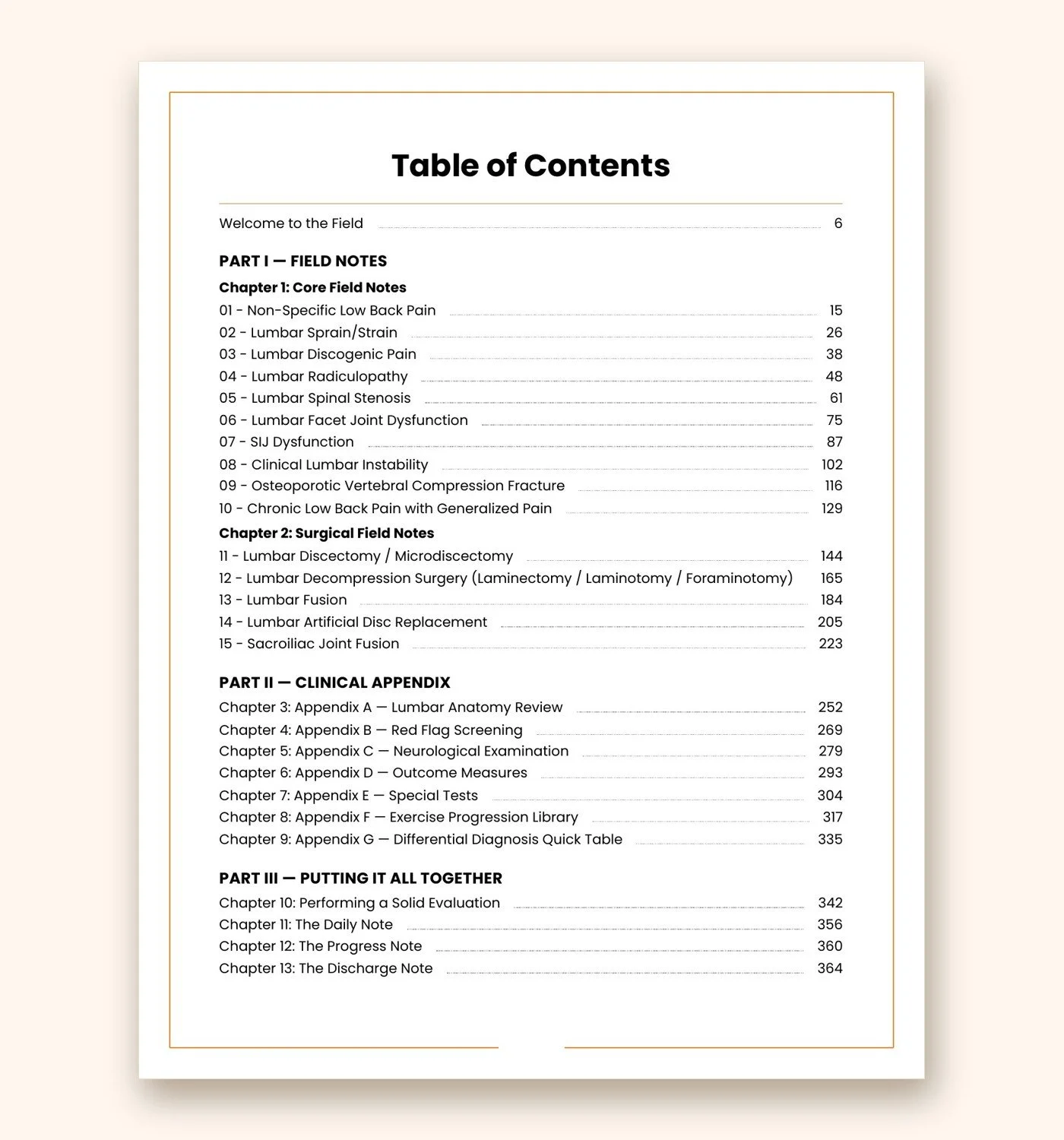
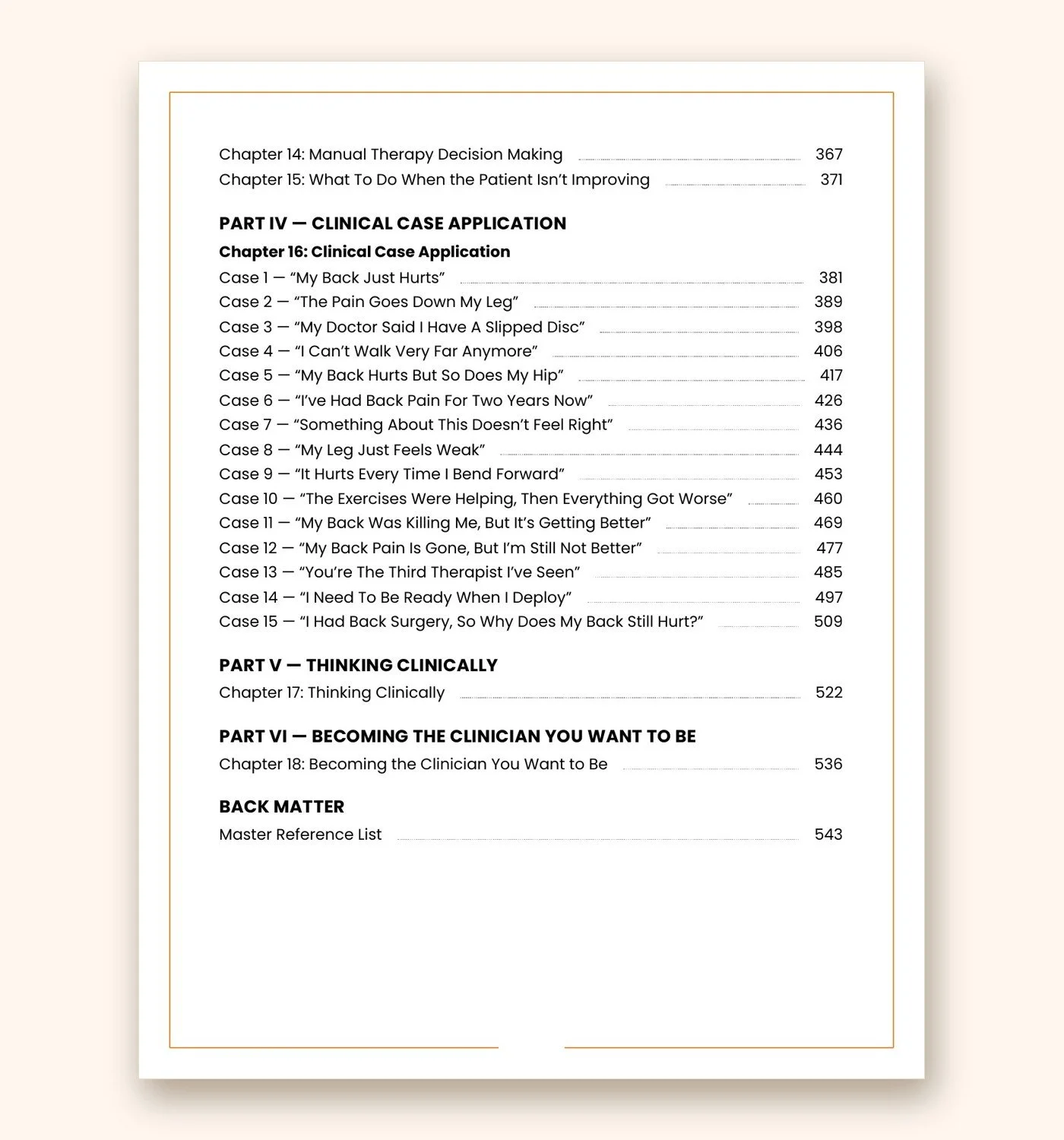
If you like how it reads, the full book includes 15 Field Notes, 15 clinical cases, and a complete clinical appendix, as well as real-world advice for clinical rotations.
Written by Kara Marks, PT, DPT


A stronger runner is a more resilient runner.
The Injury Resistant Runner is a 12-week strength training program designed specifically for runners who want to stay healthy, run consistently, and get stronger without spending hours in the gym.
Most runners know they should strength train.
The problem is finding a plan that’s actually realistic.
This program was built for busy runners who want the biggest return from the least amount of time. Every workout is focused on high-value exercises that improve strength, stability, durability, and running performance without unnecessary fluff.
No complicated bodybuilding splits.
No 90-minute gym sessions.
Just efficient training that supports your running instead of competing with it.
Designed by a physical therapist, this program helps runners:
Build strength that carries over to running
Improve durability and reduce injury risk
Increase stability, balance, and control
Stay consistent without feeling overwhelmed
Fit strength training into a busy schedule
12-week progressive strength program
Time-efficient full body workouts
Mobility and stability exercises for runners
Exercise video demonstrations
Form and technique guidance
Workout tracking charts to log weights and monitor progress each week
Weekly reflection prompts to help you stay consistent and intentional with your training
Whether you’re training for races, trying to stay pain-free, or simply wanting to feel stronger on your runs, this program helps you build a body that can handle the miles.
Because running more only works if your body can keep up.

Strength Training for Runners: A Guide to Reducing Injury Risk
Strength training is often the missing piece of the puzzle when it comes to running!
This guide was written by a physical therapist and ultramarathoner to provide a simple framework for runners who want to incorporate strength training into their routine.
It includes two full-body workouts, a suggested warm-up, guidance on choosing weights, and a progression strategy to help runners build strength, improve durability, and reduce injury risk.

A physical therapist–designed return-to-running plan for adults who want to build toward a 5K safely and sustainably. This joint-friendly program uses gradual walk/run progressions, built-in recovery, and clear guidance to help you return to running with confidence and without rushing or pushing through pain.

Evaluation Templates: 9 Free, Fillable PDFs for Physical Therapy Evaluations
Stop starting every evaluation from a blank page. This free download gives you nine clean, ready-to-use evaluation templates that walk you through the full exam, from subjective history to assessment and goals.
What's Included:
Cervicothoracic
Shoulder
Elbow
Wrist / Hand
Lumbar
Hip
Knee
Foot / Ankle
Balance
Each Template Covers:
Subjective history with pain ratings
A safety screening checklist for spotting red flags
Region-specific objective exam: posture, palpation, joint mobility, sensation and reflexes
ROM and MMT tables with normative ranges
Special tests
A ready-to-complete assessment and a set of measurable goals
The Balance template also includes the 4-stage balance test, 30-second sit-to-stand, TUG, the Modified C-TSIB, and a space to record the Tinetti, Berg, FGA, DGI and ABC.
How to Use Them
Type directly into the fillable fields on your computer or tablet, or print them and write by hand. The templates use checkboxes for common findings, so you can complete an evaluation quickly.
Who It's For
PT students, new grads and clinicians who want a simple, organized starting point for their documentation.
Whether you’re a student learning to structure your first evaluations, a new grad building efficiency, or a clinician refining your workflow, this framework helps your knowledge show up clearly and consistently.
These templates will help you build a system that eventually becomes second nature.
Templates are for educational use and are not a substitute for clinical judgment. Always follow your facility's documentation requirements.

Move Well After 50 is a practical, evidence-informed guide designed to help adults maintain strength, confidence, and independence as they age.
Written by a licensed physical therapist, this book focuses on what actually matters for long-term function - not extreme workouts, quick fixes, or fear-based advice. Instead, it provides clear education on how the body adapts over time and how consistent, well-chosen movement supports joint health, balance, and resilience.
Inside, you’ll learn:
Why strength is the foundation of balance and confidence
How to move safely without avoiding challenge
How to interpret discomfort versus injury
How to adapt movement as your body changes
How to build habits that support independence for decades
This book is ideal for adults over 50 who want to stay active, individuals returning to movement after pain or setbacks, and anyone seeking a realistic, sustainable approach to lifelong mobility.
Move Well After 50 does not promise perfection. It offers clarity, reassurance, and a framework for moving forward with confidence so you can continue living on your terms.
No results match your search. Try removing a few filters.

